Healthcare Support Worker Jobs in Manchester M1 | Immediate Start & Flexible Shifts
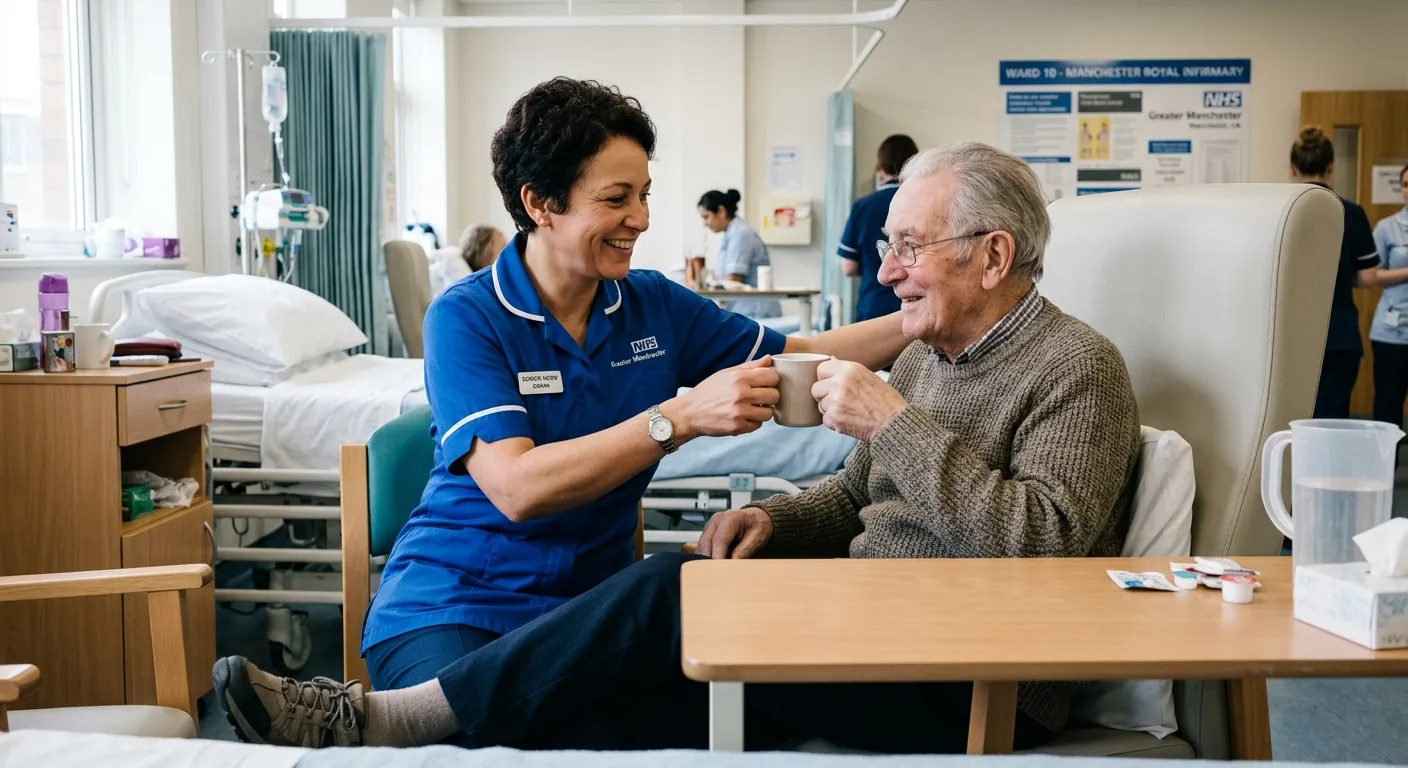
Phone Direct is actively recruiting dedicated Healthcare Support Workers for immediate temporary-to-permanent placements across the Manchester M1 region. Join a leading local staffing agency for competitive pay, weekly payments, and a role that makes a real difference.
Healthcare Support Worker Job Description
Phone Direct is partnering with leading healthcare providers, NHS trusts, and private care homes across Manchester M1 to recruit compassionate and skilled Healthcare Support Workers. This is a vital frontline role where you will provide essential personal and clinical support to patients, ensuring their dignity, comfort, and well-being are maintained in various settings including hospitals, residential care, and community outreach.
As a trusted Manchester recruitment agency, we understand the local healthcare landscape. We don't just fill vacancies; we build lasting careers. Successful candidates will benefit from our extensive network, gaining access to roles that match their skills and lifestyle, whether you're seeking an immediate start after a career break or looking to transition from other sectors like Construction Labourer or Site Cleaner roles into the rewarding field of care.
Key Responsibilities & Duties
As a Healthcare Support Worker in Manchester, your day-to-day tasks will be diverse and patient-focused. You will be an integral part of the care team.
- Direct Patient Care: Assist with personal hygiene, toileting, dressing, feeding, and mobilising patients, always promoting independence and respect.
- Clinical Support: Work under the supervision of registered nurses, performing tasks such as taking and recording vital signs (blood pressure, temperature, pulse), simple wound dressings, and blood glucose monitoring.
- Emotional & Social Support: Provide companionship, engage patients in activities, and offer reassurance to alleviate anxiety for both patients and their families.
- Safety & Compliance: Maintain a clean, safe, and hygienic environment for patients. Adhere strictly to infection control protocols, health & safety regulations, and patient confidentiality (GDPR).
- Administration & Teamwork:
Essential Requirements & Skills
We are looking for individuals with the right attitude and transferable skills. While experience is advantageous, a genuine passion for care is paramount.
Must-Have Criteria
- Right to Work: Valid proof to work in the UK.
- Enhanced DBS: Willingness to undergo an Enhanced Disclosure and Barring Service check (we can assist).
- Compassionate Nature: A genuine desire to help and care for others.
- Reliability: Punctual, dependable, and professional attitude.
Highly Desirable Skills
- Previous Care Experience: 6+ months in a care home, hospital, or similar.
- NVQ Level 2/3 in Health & Social Care or equivalent.
- Manual Handling & First Aid certifications.
- Driver's License & Own Transport for community roles.
A Day in the Life: The Impact of a Support Worker
Understanding the role is key. This video provides a realistic insight into the daily tasks and profound impact a Healthcare Support Worker has within a modern healthcare team.
Video: A glimpse into the rewarding daily routine of care professionals.
Salary, Benefits & Career Progression
Your Rewards Package
- Competitive Hourly Pay: £12.50 - £15.50 per hour, paid weekly via PAYE.
- Holiday Pay: Accrued on all hours worked, in line with UK legislation.
- Pension Scheme: Auto-enrolment pension options available.
- Flexible Shifts: Choose from days, nights, weekends, or bank holidays to suit your life.
- Temp-to-Perm Pathway: Many of our temporary roles lead to permanent contracts with the client.
Career Development with Phone Direct
We invest in our candidates. Beyond this role, we offer a clear path for growth within the wider health and social care sector.
- Free Training: Access to mandatory and upskilling courses (e.g., Medication Administration, Dementia Care).
- Dedicated Consultant: A single point of contact who understands your goals and the local recruitment talent market.
- Diverse Opportunities: From this role, you could progress to Senior Support Worker, Nursing Associate, or explore specialised areas like mental health or learning disabilities.
How to Apply for This Healthcare Support Worker Role
The application process with Phone Direct is straightforward and designed to get you into work quickly.
Submit Your Application
Click the 'Apply Now' button on this page or send your CV directly. Ensure your CV highlights any relevant experience, even if from other sectors like Demolition Labourer or Site Cleaner roles, as skills in teamwork, safety awareness, and physical stamina are highly transferable.
Screening & Interview
A consultant will call you for a brief, friendly chat to discuss your experience, availability, and career goals. This may be followed by a formal interview, either in our Manchester office or via video call.
Registration & Compliance
We'll guide you through the quick online registration and compliance process, including your right to work and DBS application. We handle the paperwork so you can focus on preparing for your role.
Start Your Placement
Once cleared, you'll be matched with a suitable placement. You'll receive a full induction and be supported by your consultant throughout your assignment. Whether you're looking for a long-term position or flexible temporary work, we have opportunities across Manchester.
If you are interested email your cv and info to [email protected].
Alternatively, call our team on +442033935357 to speak directly about this Healthcare Support Worker role in Manchester M1.
Why Choose Phone Direct?
As a leading Manchester-based recruitment agency, we bridge the gap between talented individuals and the healthcare providers who need them. We're not just a faceless platform; we're your local career partner.
- Local Expertise: Deep knowledge of the Manchester M1 healthcare job market and employers.
- Speed & Efficiency: From application to first shift, we prioritise a fast, smooth process.
- Ongoing Support: Your dedicated consultant is just a call away for any queries or support during your assignment.
- Wide Network: Access to exclusive roles with NHS trusts, private hospitals, and care providers not always advertised publicly.
Other Immediate Start Roles in Manchester
Phone Direct is also recruiting for these urgent positions. Explore our full job board.
Need Staff Fast?
Are you a healthcare provider in Manchester needing reliable Healthcare Support Workers or other temporary staff? Phone Direct provides comprehensive staffing solutions.
Hire Through Phone Direct →Frequently Asked Questions
While previous experience in a care setting is highly desirable and can command a higher pay rate, it is not always mandatory for entry-level positions. We value transferable skills, a compassionate attitude, and a willingness to learn above all. Many successful candidates come from roles requiring similar soft skills, such as Construction Labourers (teamwork, safety awareness) or Site Cleaners (attention to detail, reliability). We provide essential training to get you started.
Healthcare operates 24/7, so we have a wide variety of shifts to suit different lifestyles. Common patterns include:
Early Shifts: 7 am - 3 pm
Late Shifts: 1 pm - 9 pm
Long Days: 7 am - 7 pm
Nights: 8 pm - 7 am (often with enhanced pay)
We also have part-time hours, weekend-only work, and bank (zero-hours) contracts for maximum flexibility. During registration, we'll discuss your availability to match you with suitable placements.
For candidates with all necessary documentation ready (Right to Work, references), the process can be very swift. We aim to conduct initial screening within 24-48 hours of application. If you are a good match for an immediate vacancy, you could be registered, compliant, and starting your first shift within 5-7 working days. The speed depends on how quickly we can complete your DBS check and receive references. We prioritise communication to keep you informed at every step.
The titles are often used interchangeably within the UK, especially by recruitment agencies. Both roles provide essential personal and clinical care under the direction of qualified nurses. Generally, a Healthcare Assistant (HCA) is a title more commonly used within NHS hospital settings, while Healthcare Support Worker (HSW) is used broadly across hospitals, mental health, learning disabilities, and community care. The core duties are very similar. At Phone Direct, we recruit for both under the umbrella of support roles, and your duties will be clarified by the specific employer during placement.
Absolutely. Temporary, flexible work is a core part of our service. Many candidates choose agency work for its flexibility—to fit around studies, family commitments, or to try different healthcare settings before committing to a permanent role. We have short-term contracts covering leave, seasonal demand, and project-based work. You are free to accept or decline assignments based on your availability. We also offer temp-to-perm roles, where a temporary placement can become a permanent job offer if it suits both you and the employer.
Start Your Healthcare Career in Manchester Today
Don't miss this opportunity to join a sector where you can make a tangible difference every day. With Phone Direct, you get local expertise, ongoing support, and a pathway to a rewarding career.
Phone Direct Ltd is an equal opportunities employer and employment agency registered in England. | © Phone Direct. All rights reserved.
The Manchester M1 Healthcare Landscape: Where You'll Work
Manchester City Centre (M1) is a dynamic hub for healthcare, home to world-leading NHS trusts, innovative private hospitals, and a network of specialist care providers. As a Healthcare Support Worker with Phone Direct, you gain access to this diverse ecosystem, allowing you to find the environment that best suits your skills and career aspirations.
Types of Facilities You Could Be Placed In:
Major Acute NHS Hospitals
Such as Manchester Royal Infirmary or nearby teaching hospitals. Here, you'll work on fast-paced wards like A&E, medical, surgical, or elderly care, gaining broad experience in acute clinical support.
- Pace: Fast, structured, team-oriented.
- Skills Gained: Advanced clinical observations, working within large multi-disciplinary teams.
Private Surgical & Medical Hospitals
Facilities like The Alexandra Hospital or HCA UK units offer a different pace, often with planned procedures. The focus is on high-quality patient experience and post-operative recovery support.
- Pace: Planned, patient-centric, detail-focused.
- Skills Gained: Pre-and post-op care, managing patient expectations.
Your Skills Are More Valuable Than You Think: A Transferable Skills Deep Dive
We actively encourage candidates from non-care backgrounds to apply. The resilience, work ethic, and practical skills developed in other sectors are invaluable in healthcare. Let's break down how your previous experience directly translates.
| Your Previous Role | Key Transferable Skill | Application in Healthcare Support |
|---|---|---|
| Construction Labourer / Demolition Labourer | Physical stamina, adherence to strict health & safety protocols, teamwork under pressure. | Enables safe patient moving and handling, maintaining a hazard-free environment, and functioning effectively in a busy ward team during emergencies. |
| Site Cleaner / Industrial Cleaner | Meticulous attention to detail, understanding of infection control principles, pride in a tidy workspace. | Directly applicable to maintaining clinical cleanliness, preventing Healthcare-Associated Infections (HAIs), and ensuring patient areas are safe and dignified. |
| Retail or Hospitality Worker | Customer service, communication, patience, managing multiple requests, working unsocial hours. | The core of care is service. These skills translate to compassionate patient interaction, communicating with families, and managing the demands of a shift. |
| Warehouse Operative | Logistical awareness, following procedures, efficiency, physical activity. | Useful for managing equipment and supplies on a ward, following complex care plans step-by-step, and being on your feet for long periods. |
"We recently placed a former construction site supervisor who was seeking a more people-focused career. His leadership skills and safety-first mindset made him a natural fit for a senior support worker role within six months. It's about attitude, not just a checkbox on experience." – Sarah, Phone Direct Healthcare Consultant.
A Detailed Narrative: Your Potential Day on an Elderly Care Ward in Manchester
To truly understand the role, let's walk through a hypothetical but realistic day for a Phone Direct Healthcare Support Worker placed on an NHS elderly care ward in central Manchester.
Handover & Planning
You arrive for your early shift, don your uniform, and attend the nursing handover. You learn about your allocated patients: Mr. Ahmed, who is recovering from pneumonia and needs encouragement with mobility; Mrs. Jones, who has dementia and requires support with personal care and meals; and Mr. Smith, who is independent but needs observations. You check the care plans and note any specific tasks for the day.
Personal Care & Breakfast
You assist Mrs. Jones with washing and dressing, using communication techniques recommended in her care plan to reduce her anxiety. You help her to the day room for breakfast, ensuring she has adapted cutlery. For Mr. Ahmed, you provide a wash at his bedside, monitor his breathing as instructed, and encourage him to sit in his chair. You record fluid intake and output for both patients, a crucial clinical data point.
Clinical Tasks & Teamwork
The staff nurse asks you to take and record vital signs (blood pressure, temperature, pulse, oxygen saturation) for all your patients. You report that Mr. Ahmed's temperature is slightly elevated. The nurse reviews him and asks you to help with a simple wound dressing for a different patient, under her direct supervision. You gather the sterile supplies, assist, and dispose of clinical waste correctly.
Mobility & Emotional Support
After lunch, you work with the physiotherapist to help Mr. Ahmed take his first short walk down the corridor since his admission. Your role is to ensure his safety and provide encouragement. Later, you spend 20 minutes with Mrs. Jones, looking at a picture book of Manchester's history, which helps orient and calm her. This social interaction is as vital as any clinical task.
Handover & Reflection
You ensure all your documentation is up-to-date on the digital system. You provide a detailed verbal handover to the late shift support worker, highlighting Mr. Ahmed's mobility progress and Mrs. Jones's calm afternoon. You leave knowing you've provided essential, compassionate care that directly contributed to your patients' well-being and recovery.
Navigating Compliance & Training: Your Roadmap to Getting Started
We understand that the required checks and training can seem daunting. At Phone Direct, our consultants streamline this process, providing clear guidance and support every step of the way. Here’s a transparent breakdown of what’s involved.
The Enhanced DBS Check
This is a mandatory criminal record check for anyone working with vulnerable groups. Don't let past minor offences deter you – we advise on a case-by-case basis.
- Our Role: We initiate and manage the application online for speed.
- Cost: Often subsidised or arranged by the end client. We clarify this upfront.
- Portability: Once you have a DBS certificate, you can join the Update Service (£13/year) to make it transferable between roles.
Mandatory Training Modules
Before your first shift, you'll complete essential e-learning. This isn't a barrier; it's your foundation for safe practice.
- Core Topics: Safeguarding Adults & Children, Infection Prevention & Control, Basic Life Support, Manual Handling, GDPR & Confidentiality.
- Delivery: Accessible online platform, completed at your own pace, usually within 1-2 days.
- Support: Your consultant is available to answer any questions on the material.
Ongoing & Upskilling Training
Your development doesn't stop at compliance. We offer and signpost you to further qualifications to advance your career.
- NVQ Pathways: We can place you with employers who offer accredited NVQ Level 2/3 apprenticeships in Health & Social Care.
- Specialist Courses: Dementia Care, End of Life Care, Medication Administration competency.
- Funding: Many courses are funded by the employer or through government apprenticeship levies.
Beyond the Role: Long-Term Career Pathways in Health & Social Care
Starting as a Healthcare Support Worker is often the first step on a fulfilling career ladder. The experience you gain in Manchester's diverse settings is a powerful springboard. Here are concrete pathways our candidates have taken.
Healthcare Support Worker (Entry)
Gain foundational experience across different settings (hospital, care home). Master core competencies in personal care, observations, and communication.
Focus: Building confidence, completing mandatory training, exploring specialisms.
Senior Healthcare Assistant / Support Worker
Take on mentorship of new staff, lead specific activities, develop deeper knowledge in a chosen area (e.g., dementia, palliative care). Often involves undertaking an NVQ Level 3.
Focus: Developing leadership, undertaking advanced clinical tasks under supervision.
Nursing Associate (Foundation Degree) or Assistant Practitioner
Nursing Associate (Foundation Degree) or Assistant Practitioner
A nationally recognised, regulated role bridging the gap between support worker and registered nurse. You would undertake a 2-year foundation degree apprenticeship, often fully funded, while working. Responsibilities include more complex clinical procedures and care planning.
Focus: Academic study alongside work, expanding clinical scope of practice significantly.
Registered Nurse or Specialist Practitioner
Many Nursing Associates top-up to become full Registered Nurses (RN). Alternatively, you could specialise without moving to RN, becoming an expert in areas like Mental Health, Learning Disabilities, Theatre Support, or Community Care Management.
Focus: Full professional registration or deep specialist expertise, higher responsibility and salary.
"I started with Phone Direct as a temporary HSW with just retail experience. They placed me in a neuro-rehab unit, and I found my passion. With their support, I secured a permanent role there and my employer is now funding my Nursing Associate degree. It's changed my life." – Jamie, Former Phone Direct Candidate.
Financial & Practical Considerations for Manchester-Based Workers
Taking a new role involves practical planning. Here’s honest, local advice to help you make an informed decision about working in Manchester M1.
Understanding Your Take-Home Pay
Your quoted rate of £12.50 - £15.50 per hour is gross pay. As a PAYE agency worker, your deductions will include Income Tax, National Insurance, and pension auto-enrolment if eligible.
Example Weekly Calculation (Estimate):
- Hours: 37.5 hours @ £13.50/hr = £506.25 Gross
- Tax & NI Deductions: ~£85-£100 (varies with personal allowance)
- Approx. Weekly Take-Home: ~£410-£425
*This is an illustrative example only. We provide clear payslips and can recommend independent financial advisors for complex queries.
Enhanced Pay: Night shifts, weekends, and bank holidays typically attract higher hourly rates, often between £15.00 - £20.00+ per hour.
Travel & Connectivity in Manchester M1
Manchester's central location is a major advantage. Most major hospital trusts are accessible via the extensive Metrolink tram network, buses, or mainline trains.
- Parking: Can be expensive and limited at city-centre hospitals. We advise researching park-and-ride options or season tickets for public transport, which many employers partially subsidise.
- Community Roles: If you have a driver's license and vehicle, we have numerous community support worker roles with mileage allowances, visiting patients in their own homes across Greater Manchester.
- Shift Timing & Transport: We consider your location when offering shifts, especially for early starts or late finishes, to ensure public transport is viable.
Wellbeing & Resilience: Supporting You in a Demanding Role
Healthcare is rewarding but can be emotionally and physically demanding. At Phone Direct, we believe supporting your wellbeing is non-negotiable. It’s what allows you to provide sustainable, high-quality care.
Our Support Framework for You
Dedicated Consultant
Your single point of contact for any issue – from shift queries to workplace concerns. Regular check-ins are standard, not optional.
Confidential Safeguarding
A clear, confidential pathway to report any concerns about patient safety or your own treatment at a placement. We act as your advocate.
Access to Resources
We provide links to reputable, independent wellbeing resources, including mindfulness apps, financial advice charities, and professional counselling services available to NHS and care staff.
Ready to Make Your Move into Manchester Healthcare?
You now have a comprehensive picture of the role, the support you'll receive, and the exciting career it can launch. The next step is a conversation.
Applying takes less than 5 minutes. One of our Manchester-based consultants will call you back within one working day to discuss your options, with zero obligation.
Applicant Quick Links
"I was nervous about moving from warehouse work into care. Phone Direct didn't see a lack of experience; they saw my reliability and trained me up. My consultant, Lisa, was with me every step, and now I'm on a permanent contract at a fantastic care home. It's the most satisfying job I've ever had."
David K.
Former Warehouse Operate, now Senior Support Worker
Placed by Phone Direct, 2024
Key Recruitment Dates
We have regular intake periods for major NHS and private provider contracts.
This varies by placement. Most NHS trusts and large care providers will supply a uniform (usually tunics and trousers) which you collect and launder yourself. For some temporary assignments, you may be required to wear smart, all-black trousers and a top with closed-toe shoes initially. Your Phone Direct consultant will always clarify the dress code and uniform policy for your specific placement before you start. We also advise on comfortable, supportive footwear – a crucial investment for your comfort.
As a PAYE worker with Phone Direct, you accrue holiday pay in line with UK law (currently 5.6 weeks per year, pro-rata). Your holiday pay is calculated as a percentage of your gross earnings (typically around 12.07%) and is either added to your weekly pay (rolled up) or, more commonly, banked for when you take approved leave. You will have access to an online portal where you can view your accrued holiday balance and request to have it paid out. We provide clear guidance on how to request and take your holiday entitlement.
Absolutely. During registration, we discuss your interests and career goals in detail. While initial placements may be more general to build your foundational skills, we actively work to match you with opportunities in your preferred specialism as they arise. For areas like paediatrics or mental health, additional specific training or checks may be required, which we can help facilitate. Being clear about your interests helps us be better partners in your career development.
Specialized Pathways: Finding Your Niche in Manchester's Healthcare Sector
The role of a Healthcare Support Worker is not monolithic. Manchester's diverse healthcare landscape offers numerous specialized pathways where you can deepen your expertise and find a role that aligns with your personal passions and strengths. This specialization often leads to greater job satisfaction, enhanced skills, and potentially higher pay.
Mental Health & Learning Disabilities Support
Manchester is a national leader in mental health provision, with dedicated trusts and community services. Support workers in this field focus on therapeutic engagement, de-escalation techniques, and supporting daily living within recovery-focused models.
- Typical Settings: Inpatient psychiatric units, community mental health teams, supported living accommodations, specialist LD hospitals.
- Key Skills Developed: Therapeutic communication, risk assessment, understanding of Mental Health Act frameworks, behavioral support planning.
- Career Progression: Towards Mental Health Nursing, Approved Mental Health Professional (AMHP) roles, or specialist practitioner in autism or challenging behavior.
Theatre & Surgical Support
Operating departments offer a highly technical and structured environment. Support workers here, often called Theatre Support Workers or Healthcare Science Assistants, are integral to the smooth running of surgical lists, focusing on logistics, infection control, and direct support to the surgical team.
- Typical Settings: NHS and private hospital operating theatres, day surgery units, anaesthetic and recovery rooms.
- Key Skills Developed: Sterile technique, surgical instrumentation knowledge, patient positioning, complex equipment handling.
- Career Progression: Towards Operating Department Practitioner (ODP) roles or management of theatre supplies and logistics.
Case Study: A Real Transition - Mark's Journey from Construction to Community Care
To illustrate the tangible journey of career changers, let's follow Mark, a 32-year-old former site supervisor from Salford who successfully transitioned into a community healthcare role through Phone Direct.
The Starting Point (March 2023)
After 10 years in construction, Mark sought a more people-focused career with stable hours. He worried his lack of care experience was a barrier. He applied online, highlighting his skills in team leadership, safety management, and problem-solving on his CV.
Phone Direct's Role
His consultant, Lisa, reframed his experience:"Your site safety audits are like infection control checks. Managing a team under pressure is like coordinating care on a busy shift." She placed him in a 4-week temporary role at a large care home to 'test the water', ensuring he had extra shadowing shifts.
The Breakthrough & Specialization
Mark excelled at the practical aspects and building rapport with residents. Lisa noticed his aptitude for explaining procedures clearly. She recommended him for a Community Reablement Support Worker role, assisting patients discharged from hospital to regain independence at home. His logistical skills from planning construction jobs were perfect for organizing daily visits and adaptive equipment.
Outcome (April 2024)
Mark is now a permanent employee of the community NHS trust. He is undertaking a fully-funded Level 3 Diploma in Adult Care and is being mentored to become a Reablement Assessor. His salary has increased by 18% from his starting agency rate, and he works predictable hours close to home.
From first application to permanent specialist role
"Lisa saw what I could be, not just what I'd done. The training was tough but practical. I use my old skills every day—just now I'm helping rebuild people's confidence, not walls."
— Mark, Community Reablement Support Worker
The Economics of Agency Work: A Transparent Financial Breakdown
Understanding the financial model of agency work is crucial for making an informed decision. Here, we dissect the costs, benefits, and long-term financial implications compared to direct employment.
| Financial Aspect | Direct NHS Employment (Band 2) | Phone Direct Agency Role (PAYE) | Notes & Implications |
|---|---|---|---|
| Hourly Rate (Gross) | ~£11.44 - £11.84 | £12.50 - £15.50+ | Agency rates are typically higher to offset lack of sick pay and perceived instability. Enhanced rates for nights/weekends can be significantly higher. |
| Paid Leave | Yes - 27+ days + bank holidays (paid) | Holiday Pay Accrued (12.07% of earnings) | Agency holiday pay is a legal entitlement but is accrued and paid when taken. It is not 'rolled up' into hourly rate illegally. |
| Sick Pay | Statutory Sick Pay (SSP) & often enhanced company scheme after probation | Statutory Sick Pay (SSP) only, subject to eligibility | A major consideration. Agency workers do not get paid for shifts not worked unless they qualify for SSP. |
| Pension | NHS Pension Scheme (one of the best in UK) | Auto-enrolment pension (standard minimum contributions) | The NHS pension is a significant long-term benefit. Agency workers should actively manage their pension pot. |
| Career Progression Pay Rises | Incremental within band, promotion to Band 3 etc. | Rate increases based on experience, skills, and performance with agency | Agency progression is less structured but can be faster for high performers. Moving to a permanent role often resets to the base of the relevant NHS band. |
| Union Representation | Strongly encouraged, with recognised unions (e.g., UNISON, RCN) | Available but less common; reliance on agency for advocacy | Agency workers can and do join unions. Phone Direct has clear grievance procedures to support workers. |
Strategic Insight: Many candidates use agency work as a strategic stepping stone. The higher initial hourly rate can be advantageous for saving or paying down debt. The variety of placements allows you to 'audition' for different employers and specialties, often leading to a permanent offer that includes the long-term benefits of direct employment. We advise candidates to view the first 6-12 months with an agency as a paid exploration and training period.
Beyond the Basics: Advanced Clinical Skills You Can Develop
While the core of the role is personal care and basic observations, ambitious support workers can undertake additional competencies, increasing their value and job satisfaction. These are often taught in-house by NHS trusts or through agency-facilitated courses.
Venepuncture & Cannulation
Learning to take blood samples (venepuncture) and assist with setting up IV drips (cannulation) is a valuable skill in acute settings, freeing up nurses for more complex tasks.
- Typical Training: 2-3 day theory & practical course, followed by supervised practice until signed off as competent.
- Impact: Makes you essential on busy medical/surgical wards. Can lead to roles in phlebotomy teams or day units.
ECG Recording
Competency in performing 12-lead electrocardiograms (ECGs) is crucial in cardiology, pre-operative assessment, and acute medical units.
- Typical Training: Half-day practical workshop. Interpretation is done by nurses/doctors, but accurate recording is key.
- Impact: Increases your utility in outpatient clinics, cardiology wards, and emergency departments.
Catheter & Stoma Care
Specialized training in caring for patients with urinary catheters or stomas, including hygiene, emptying bags, and recognizing signs of infection.
- Typical Training: Integrated into mandatory updates or as a standalone module. Often includes specimen collection.
- Impact: Vital for urology wards, community nursing teams, and providing dignified care for long-term conditions.
The Digital Landscape: Technology You'll Use in Manchester's Healthcare Settings
Modern healthcare is increasingly digital. Familiarity with technology is now a core, albeit often unstated, requirement. Here’s an overview of the systems you're likely to encounter, demystifying the tech side of the role.
Common Digital Systems
Electronic Patient Records (EPR)
Systems like EPIC (used at Manchester University NHS FT), Cerner, or SystemOne. You'll use these to view patient details, record vital signs, input care notes, and track tasks. Training is always provided.
Mobile Vital Signs Devices
Wireless monitors that automatically upload blood pressure, temperature, and oxygen readings directly to the EPR, reducing manual entry errors. You'll be shown how to sync and use them.
e-MAR (Electronic Medication Administration Record)
A digital system for managing and recording medication rounds. As a support worker, you may not administer drugs, but you might need to check the e-MAR for timings or report if a patient has refused medication.
Overcoming Tech Anxiety
Many new starters, especially career changers, worry about this aspect. Our experience shows it's rarely a problem.
- Training is Comprehensive: You'll have dedicated login credentials and formal training, often with practice environments.
- Support is On-Site: Ward clerks, nurses, and dedicated IT"super-users" among the support staff are always available to help.
- It's Task-Focused: You'll learn the 5-6 specific functions you need daily (e.g.,"how to record a blood pressure"). You don't need to understand the whole system.
- Transferable Skill: Comfort with these systems is a huge asset if you later apply for permanent NHS roles, where digital literacy is assumed.
Building Your Professional Portfolio: Documenting Your Growth
In healthcare, your experience and competencies are your currency. We encourage all our workers to proactively build a professional portfolio. This isn't just for nurses; it's a powerful tool for support workers to secure promotions, permanent roles, and access further training.
What to Include in Your Portfolio
1Certifications & Certificates
- Mandatory Training Certificates (Safeguarding, Manual Handling, etc.)
- Specialist Course Certificates (Dementia Care, Venepuncture)
- Apprenticeship or NVQ Diplomas (scan as you complete modules)
- First Aid & Basic Life Support re-certifications.
2Evidence of Competence
- Workplace Assessments: Copies of signed competency checklists (e.g., for vital signs, blood glucose monitoring).
- Reflective Accounts: Short written reflections on challenging situations or what you learned from a particular patient. Anonymise all patient details.
- Feedback: Keep emails or notes from nurses, managers, or patients' families thanking you for your care (with confidentiality maintained).
How Phone Direct Helps
We provide a digital candidate portal where you can store copies of all your certificates and compliance documents. During reviews, your consultant can help you identify gaps in your portfolio and recommend training to fill them. When it's time to apply for a permanent role, this portfolio will give you a concrete advantage over candidates with only a CV.
The Interview Process Decoded: What Manchester Employers Really Ask
Passing the Phone Direct screening is your first step. For many temp-to-perm or desirable permanent roles, you'll then interview directly with the employer (NHS ward manager, care home manager, etc.). These interviews are values-based and situational.
Common Question Type 1: Values & Motivation
Example Question:"Why do you want to work in healthcare, specifically in this setting (e.g., elderly care/mental health)?"
What They're Looking For:
Genuine passion, not just a desire for any job. Awareness of the challenges and rewards of the specific area.
Strong Answer Framework:
"I'm drawn to elderly care because I value dignity and continuity. I understand it involves challenging aspects like dementia care, but I find the opportunity to build relationships and support someone's daily life deeply meaningful. My experience in [previous role] taught me patience and resilience, which I believe are directly applicable."
Common Question Type 2: Situational & Safety
Example Question:"You're helping a patient to the bathroom and they start to fall. What do you do?"
What They're Looking For:
Prioritisation of patient safety and your own safety, knowledge of procedure, and clear communication.
Strong Answer Framework:
"My first priority is to prevent injury. I would not try to catch them fully, as that risks injuring us both. I would try to guide them safely to the floor, supporting their head if possible. I would then immediately call for help using the nurse call system, stay with the patient to reassure them, and not attempt to move them until a trained colleague arrives to assess. I would then complete an incident report as required."
Common Question Type 3: Teamwork & Conflict
Example Question:"How would you handle it if you felt a senior colleague was treating a patient disrespectfully?"
What They're Looking For:
Professionalism, courage to safeguard, understanding of escalation pathways, and diplomatic communication.
Strong Answer Framework:
"Patient dignity is paramount. I would first ensure the immediate safety of the patient. If appropriate and safe, I might model respectful behavior or offer to assist. I would then speak privately with the colleague at the earliest opportunity, expressing my concern calmly and factually. If the behavior continued or was serious, I would follow the safeguarding policy and report my concern to the nurse in charge or my manager. I understand my duty of care overrides hierarchical concerns."
Phone Direct provides interview coaching as part of our service for roles we put you forward for. We run through these exact types of questions, helping you structure answers using the STAR method (Situation, Task, Action, Result) to provide clear, concise examples from your past experience, even if from other sectors.
The First 90 Days: Your Survival & Success Guide
Starting any new job is daunting, especially in a fast-paced healthcare environment. This phased guide outlines what to focus on to build confidence and become a valued team member quickly.
Days 1-30: Learn & Observe
- Focus on Safety: Master infection control protocols, manual handling techniques, and emergency procedures first.
- Ask Every Question: No question is too small. Where are the supplies? How does this call bell work? What's the process for…?
- Build One Relationship: Identify a friendly senior HCA or nurse who can be your informal"buddy."
- Goal: Complete all local induction training. Be able to perform core personal care tasks confidently for 2-3 patients.
Days 31-60: Contribute & Integrate
- Increase Your Load: Take on a full patient allocation under supervision. Start performing routine clinical observations independently.
- Understand the 'Why': Move beyond tasks. Why does Mr. X need turning every 2 hours? Why is Mrs. Y on fluid monitoring?
- Team Communication: Start contributing meaningfully to handovers. Offer to help colleagues without being asked.
- Goal: Be seen as a reliable pair of hands. Manage your time well enough to complete all core tasks for your allocation.
Days 61-90: Excel & Anticipate
- Develop Anticipation: Notice that Mrs. Jones becomes restless before lunch and needs distraction. See that the stock of wound dressings is low and report it.
- Mentor New Starters: Offer guidance to someone newer than you, even if just showing them where things are.
- Feedback & Development: Proactively ask your shift lead for feedback. Discuss with your Phone Direct consultant about next steps or additional training.
- Goal: Become an integrated, proactive member of the team. Be considered for more complex tasks or patients.
Your Manchester Healthcare Career Starts with a Single Step
You've now explored the role in unprecedented depth—from daily tasks and finances to long-term careers and interview strategies. The only missing piece is you. Phone Direct is here to translate your potential into practice.
Facilitated across Greater Manchester in the last 12 months.
Of our candidates in healthcare who want a permanent role secure one within 9 months.
Out-of-hours line for urgent shift queries or wellbeing concerns.
Phone Direct is an accredited supplier to the NHS Crown Commercial Service and holds the Good Recruitment Charter. We are committed to ethical recruitment and the wellbeing of every candidate who partners with us.
The Intangible Rewards: Why Healthcare Support Work is More Than a Job
While the financial and career benefits are clear, the most compelling reasons to become a Healthcare Support Worker are often intangible. These are the moments that define the role and provide a profound sense of purpose that is rare in other professions.
Moments That Matter
The First Independent Step
Witnessing a patient who has been bedbound for weeks take their first tentative steps with your support. The mixture of fear, determination, and eventual triumph in their eyes creates a memory that fuels you through challenging shifts.
The Breakthrough Connection
Working with a dementia patient who has been withdrawn and uncommunicative for days, and finally finding the right song, photograph, or topic that sparks recognition and a genuine, lucid conversation. These moments of connection are priceless victories.
Family Gratitude
The heartfelt thanks from a daughter who sees her mother being treated with dignity and compassion, or the relief on a husband's face when you take the time to explain his wife's care in simple, reassuring terms. You become a crucial pillar of support for entire families in crisis.
Team Solidarity
The unspoken bond that forms when you and your colleagues navigate a particularly difficult shift together—managing a sudden deterioration, supporting each other through emotional stress, and sharing a quiet moment of dark humour that gets you through. This creates friendships and professional respect that last a lifetime.
Addressing Concerns: Debunking Common Myths About Healthcare Support Roles
Misconceptions can deter talented people from considering this career. Let's address these head-on with facts and realistic perspectives from current Manchester-based support workers.
The Reality
While personal care is a fundamental and honorable part of the role, it is the foundation upon which therapeutic relationships are built. It is during these intimate moments of care that you assess skin integrity, notice subtle changes in condition, build trust, and provide emotional support.
"Yes, I help people with personal care. But that's when Mrs. Brown told me about her son visiting from Australia, and I could see her mood lift. That's when I noticed the early redness on Mr. Khan's skin and prevented a pressure sore. It's never 'just' anything—it's the most important part of their day, and you're there to make it dignified." – Rebecca, NHS Support Worker, MRI
The Reality
This concern focuses on the wrong thing. It's not about tolerating unpleasant sights or smells; it's about compassion overriding discomfort. Furthermore, modern healthcare has protocols, PPE, and techniques that manage clinical situations professionally. What you truly need is emotional resilience, not a cast-iron stomach.
"I was worried about this too. But you're trained, you have gloves and aprons, and you focus on the person, not the task. Your brain switches to 'how can I help this person feel better?' The 'strong stomach' myth puts people off, but the reality is about empathy, not endurance." – Tom, Community Support Worker, North Manchester
The Reality
As detailed in our career pathways section, this is perhaps the most inaccurate myth. The NHS and social care sector have structured progression routes from Band 2 to Band 8 and beyond. A Healthcare Support Worker role is the single most common entry point into nursing, operating department practice, physiotherapy assistant roles, and management. It is a launchpad, not a terminus.
"I started as a Band 2 HSW five years ago with just GCSEs. Next month, I qualify as a Nursing Associate. My trust paid for my foundation degree. My manager started as a domestic cleaner 25 years ago and is now a senior matron. If you show initiative, the opportunities are literally endless." – Chloe, Nursing Associate Student, Wythenshawe Hospital
The Manchester Advantage: Why M1 is a Premier Location for Healthcare Careers
Choosing to work in Manchester City Centre (M1) isn't just about geography; it's a strategic career decision. The concentration of world-class, innovative healthcare providers creates unique opportunities not found in smaller towns or more dispersed cities.
A Concentration of Excellence
-
1
Teaching Hospital Hub
Manchester Royal Infirmary is part of one of the largest acute teaching trusts in the UK. Working here means exposure to cutting-edge treatments, clinical trials, and a culture of continuous learning. You're at the forefront of medical advances.
-
2
Specialist Centre Density
Within a short distance, you have The Christie (Europe's largest cancer centre), Manchester Royal Eye Hospital, and the Royal Manchester Children's Hospital. This allows for unparalleled opportunities to specialise or gain experience in niche areas through agency placements.
-
3
Integrated Care System
Greater Manchester has its own devolved health budget and Integrated Care System. This means more joined-up thinking between hospitals, GPs, and community services, creating new hybrid roles and career paths focused on population health.
Career Velocity & Network Effects
Working in a dense healthcare ecosystem accelerates your professional development in tangible ways.
Rapid Skill Acquisition
The high patient turnover and complexity in central Manchester hospitals mean you'll encounter a wider variety of conditions and care scenarios in your first year than you might in five years elsewhere.
Unbeatable Networking
Professionals move between the major trusts. A good impression at Manchester Royal could lead to a recommendation for a specialist role at The Christie. Your professional reputation is built in a connected community.
Future-Proofing
Manchester is a testbed for healthcare innovation, from digital health startups to new care models. Being here positions you at the ground floor of trends that will define UK healthcare for decades.
Contrasting Environments: A Week in the Life Across Different Manchester Settings
To truly understand the variety, let's follow a hypothetical Phone Direct support worker, Aisha, as she experiences three different placement settings in a single week—a testament to the flexibility and breadth of experience agency work can provide.
Monday-Tuesday: Acute Medical Ward (NHS Hospital)
Fast-paced, team-driven, clinically focused.
The Rhythm: Handover is rapid. The patient list changes daily. The pace is relentless but structured. Aisha's focus is on efficient personal care for 6-8 patients, meticulous recording of vital signs, and responding swiftly to nurse requests. There's a high emphasis on infection control and safety protocols.
Key Task
Assisting with a lumbar puncture set-up for a patient with suspected meningitis.
Skill Highlighted
Clinical preparedness, maintaining a sterile field, calm under pressure.
Wednesday-Thursday: Specialist Dementia Care Home (Private)
Relationship-based, patient-paced, holistic.
The Rhythm: The pace is deliberately slower. Aisha knows the 10 residents on her unit intimately. The focus is on emotional well-being, routine, and gentle engagement. Personal care is interspersed with activities like baking, music sessions, or walks in the secure garden. Documentation is important but less hurried.
Key Task
Using a life story book to calm a distressed resident who is searching for her mother.
Skill Highlighted
Empathic communication, knowledge of dementia, creative problem-solving.
Friday: Community Reablement (NHS/ Council Partnership)
Autonomous, educational, goal-oriented.
The Rhythm: Aisha drives to 4-5 patients' homes across South Manchester. Each visit has a specific goal: practicing stairs, planning a weekly shop, or teaching safe kitchen techniques post-stroke. She works largely independently, reporting back to a therapist. The focus is on fostering independence, not dependency.
Key Task
Successfully coaching a recently discharged patient to make a cup of tea safely using adaptive equipment for the first time since his stroke.
Skill Highlighted
Motivational coaching, risk assessment in a home environment, promoting self-efficacy.
"This variety is exactly why I love agency work. One day I'm in the high-tech environment of a hospital, the next I'm helping someone feel at home in their own kitchen. It keeps me learning and stops any chance of burnout from routine. Phone Direct lets me choose the mix that works for me." – Aisha (Hypothetical composite based on real candidate experiences).
The Science of Care: Evidence-Based Practice for the Modern Support Worker
Modern healthcare support is not just about kindness; it's informed by robust evidence. Understanding the 'why' behind tasks elevates your practice from competent to exceptional. Here are key evidence-based concepts you'll encounter and apply in Manchester's settings.
Pressure Ulcer Prevention
This isn't just about"turning patients every two hours." It's a scientific approach to tissue viability.
- The Evidence: The SSKIN Bundle (Surface, Skin inspection, Keep moving, Incontinence, Nutrition) is the nationally adopted framework.
- Your Role: You are the frontline observer. You perform systematic skin checks, noting any redness (non-blanching erythema) during personal care. You ensure correct repositioning using slide sheets to reduce shear and friction, not just brute force.
- Impact: Pressure ulcers cause immense suffering, extend hospital stays by weeks, and cost the NHS over £3.8 million daily. Your vigilant care directly prevents this.
Delirium Prevention & Management
Often called"hospital confusion," delirium is a medical emergency, not an inevitable part of ageing.
- The Evidence: The PINCH ME mnemonic helps identify causes: Pain, Infection, Nutrition, Constipation, Hydration, Medication, Environment.
- Your Role: You monitor for subtle signs: increased agitation, drowsiness, or confusion. You ensure patients have their glasses/hearing aids, maintain day/night cycles by opening blinds, and provide gentle reorientation. You report small changes in cognition immediately—they can signal infection or other issues.
- Impact: Delirium increases mortality risk and can lead to long-term cognitive decline. Your observations are the early warning system.
Navigating Grey Areas: Ethical Dilemmas & Professional Boundaries
The role will present situations where the"right" action isn't always clear-cut. Developing ethical reasoning and maintaining professional boundaries are critical skills we support you in developing.
Scenario-Based Learning
Scenario 1: The Gift
A patient with no family, for whom you've provided exceptional care over several weeks, insists on giving you a £50 gift voucher as thanks. She is of sound mind but vulnerable.
The Temptation & Risk
It feels rude to refuse her genuine gratitude. However, accepting gifts of significant value breaches professional boundaries, could be seen as exploiting vulnerability, and may create expectation of preferential treatment.
The Professional Response
"That is so incredibly kind of you, and it means the world that you feel so well cared for. However, I'm not allowed to accept personal gifts. Would you be open to me suggesting we use this to buy something for the whole ward/day room, like some new plants or books, so everyone can enjoy your generosity?" This acknowledges her kindness, maintains the boundary, and channels the gesture appropriately.
Scenario 2: Social Media & Confidentiality
You have had a particularly rewarding day and want to post on social media about your fulfilling new career. You think about taking a general photo of the hospital view from the staff room window.
The Unseen Dangers
Even without patients in shot, the photo could reveal your workplace, breaking confidentiality about where you work. A colleague's ID badge might be visible in the reflection. Geotagging could reveal the location. A seemingly innocent post can be a serious GDPR breach and lead to disciplinary action or dismissal.
The Safe Approach
Keep work and social media completely separate. Do not post anything from your workplace. Share your feelings about your career in general terms:"Feeling proud to make a difference in healthcare today." If in doubt, don't post. Your Phone Direct consultant can clarify the specific social media policy of your placement.
The Future of Support Work: Technology, AI, and Changing Care Models
The role of the Healthcare Support Worker is evolving rapidly. Far from being replaced by technology, you will be its human interpreter and executor. Understanding these trends positions you for long-term relevance.
Remote Monitoring & Virtual Wards
Patients are increasingly monitored at home using wearable tech that tracks vital signs. Support workers in community roles will visit to ensure devices are working, explain data to patients, and provide the human touch that technology cannot.
"Your role becomes tech-savvy caregiver and data facilitator, ensuring the human connection isn't lost in digital healthcare."
Robotics & Automation
Robots may soon deliver supplies or handle linen on wards. This doesn't replace your role; it frees you from logistical tasks to spend more time on direct, complex patient care and emotional support—the irreplaceable human elements.
"Automation handles the 'things,' allowing you to focus entirely on the 'people.' Your value shifts even more toward empathy and complex communication."
Precision Care & Personalisation
With better data, care becomes hyper-personalised. You'll implement bespoke activity plans for dementia patients or specific mobility protocols based on real-time recovery data. Your observational skills will feed into refining these personalised models.
"You move from task-oriented care to being a co-designer of individual wellbeing plans, using both data and deep personal understanding."
Your Pre-Start Checklist: Be Ready to Hit the Ground Running
Once you've accepted a role through Phone Direct, use this checklist to ensure your first week is smooth and successful.
Administrative
- Right to Work documents scanned and ready.
- Bank details for payroll confirmed.
- DBS application submitted.
Practical & Personal
- Invest in 2-3 pairs of supremely comfortable, supportive, closed-toe shoes.
- A reliable water bottle and easy-to-eat, high-energy snacks packed.
- Travel route tested at the time of your first shift.
Mental Preparation
- Set realistic expectations: You will feel overwhelmed initially. This is normal.
- Practice self-compassion. You are learning a complex new profession.
- Plan a relaxing ritual for after your first shift.
Professional Mindset
- Prepare questions to ask your mentor/ward manager on day one.
- Review key policies: Safeguarding, Infection Control, Manual Handling.
- Save your Phone Direct consultant's number in your phone.
The Door to Your New Career is Open in Manchester
You have the information, the insights, and the understanding. Now, you have a choice: to remain where you are, or to step into a role that offers purpose, progression, and the chance to be part of Manchester's world-class healthcare story.
Phone Direct. Your local partner. Your healthcare career.
Manchester M1 | +442033935357