Your Ultimate Guide to Hiring or Becoming a Help Desk Analyst Remote in 2026
Unlock the future of IT support. Discover high-demand remote roles, expert hiring strategies, and the skills you need to succeed in a distributed workforce.
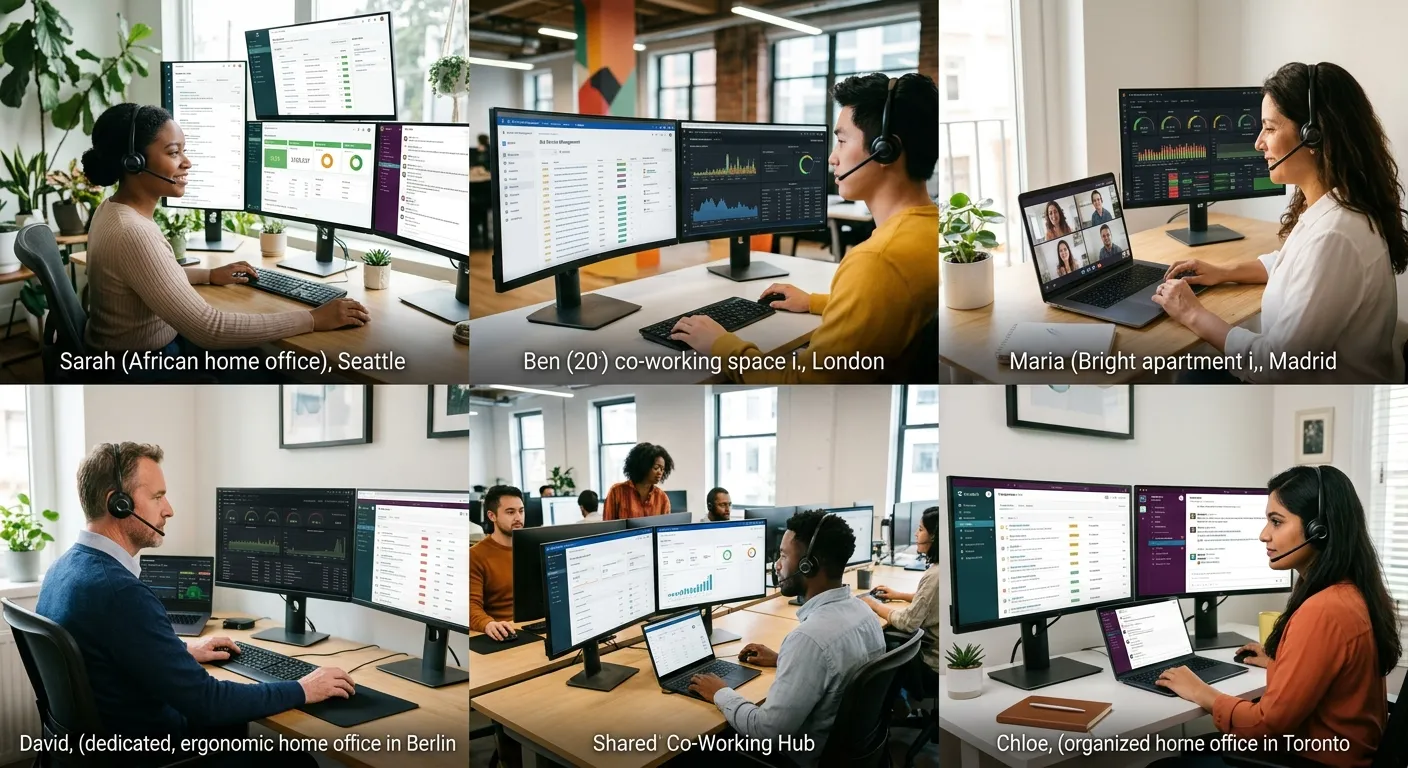
The Remote Help Desk Landscape: A Multi-Category View
Whether you're a business scaling support or a professional seeking flexibility, understanding the ecosystem is key.
What is a Remote Help Desk Analyst?
A Help Desk Analyst Remote is an IT professional who provides technical support and troubleshooting services to end-users, colleagues, or external customers from a location outside the traditional office. They are the frontline defenders of an organization's digital productivity, resolving issues ranging from password resets and software installation to complex network diagnostics.
The shift to remote work has fundamentally transformed this role. No longer confined to a physical service desk, analysts now leverage cloud-based ticketing systems (like Zendesk, Freshservice), remote desktop tools (TeamViewer, Splashtop), and VoIP communication platforms to deliver seamless support. This evolution has expanded the talent pool globally, allowing businesses to tap into specialized skills regardless of geography and offering professionals unprecedented work-life balance.
Pro-Tip: For businesses, integrating a remote help desk analyst with a Virtual Answering Service can create a unified front-line support experience. The answering service handles initial triage, while complex technical issues are escalated directly to your remote analyst.
Hiring the Best Remote IT Support Talent
Finding a reliable Help Desk Analyst Remote requires a strategy that assesses both technical competency and remote work suitability. Key hiring criteria should include proven experience with your specific tech stack, excellent written and verbal communication skills (critical for remote collaboration), and a demonstrable history of self-motivation and time management.
Consider partnering with a specialized staffing agency to streamline the process. An experienced Site Supervisor Agency or IT-focused recruiter can pre-vet candidates for remote readiness, saving you countless hours of screening. For instance, a Top Temp Agency specializing in technical roles can provide immediate, qualified candidates, much like they would for recruitment jobs in Leeds or other high-demand markets.
The interview process should simulate remote work conditions. Incorporate scenario-based questions using video conferencing tools and assess their ability to document solutions clearly in a shared digital workspace.
Building a Successful Remote Support Career
To thrive as a Help Desk Analyst Remote, you need more than technical know-how. You must cultivate a professional home office environment with reliable high-speed internet, a quality headset, and a dedicated, ergonomic workspace. Certifications like CompTIA A+, ITIL Foundation, or specific vendor credentials (Microsoft, Cisco) significantly boost your marketability.
Proactive communication is your most valuable skill. Regular updates, clear ticket notes, and over-communicating with your team are non-negotiable. Many successful remote analysts transition from related customer support fields; for example, skills gained in remote customer support jobs are highly transferable to technical help desk roles.
Seek out companies that invest in remote culture. Look for clear career progression paths into roles like Systems Administrator, Network Engineer, or IT Manager, all of which are increasingly available in remote or hybrid formats.
AI, Automation, and the Future of Remote Support
The role of the remote help desk analyst is not disappearing; it's evolving. Artificial Intelligence and automation are handling tier-1 repetitive queries (e.g.,"How do I reset my password?"), freeing up human analysts to focus on complex, high-value problem-solving and customer relationship building.
Forward-thinking businesses are blending human expertise with AI tools. An AI receptionist can answer initial calls, perform basic triage, and even create tickets before seamlessly transferring to a live Help Desk Analyst Remote. This synergy ensures no call is missed and analysts spend their time more effectively. Explore how this works in our video analysis:
The future belongs to analysts who can work alongside AI, leverage data analytics for proactive support, and possess strong soft skills—empathy, critical thinking, and adaptability—that machines cannot replicate.
Why Invest in a Remote Help Desk Analyst?
The strategic advantages extend far beyond simple cost savings.
24/7 Global Support Coverage
Build a follow-the-sun support model without expensive physical call centers. Hire analysts across time zones to provide seamless, round-the-clock service, reducing resolution times for international customers and internal teams.
Access to a Wider Talent Pool
Source the best IT talent irrespective of location. Find specialists in niche software, security, or legacy systems that may be scarce in your local market. This is particularly effective when working with a knowledgeable Site Supervisor Agency with a national or global network.
Increased Productivity & Retention
Remote work options are a top benefit for IT professionals. Offering remote positions leads to higher job satisfaction, reduced burnout, and lower turnover. Happy, focused analysts provide better customer service and deeper institutional knowledge.
Significant Operational Cost Savings
Reduce or eliminate expenses related to physical office space, utilities, on-site equipment, and local taxes. These savings can be reinvested in better collaboration tools, advanced training for your team, or competitive salaries to attract top-tier Help Desk Analyst Remote talent.
Business Continuity & Disaster Recovery
A distributed help desk team is inherently resilient. If one region experiences an internet outage or natural disaster, analysts in other locations can seamlessly pick up the support queue. This built-in redundancy is a critical component of modern business continuity planning.
Scalability & Flexibility
Easily scale your support team up or down based on project demands, seasonal peaks, or business growth. Partnering with a staffing agency allows for quick access to temporary or contract-based Help Desk Analyst Remote professionals, providing agility similar to hiring freelance chefs for a busy restaurant—expertise on demand.
Implementing a Successful Remote Help Desk: A Step-by-Step Guide
Step 1: Define Requirements & Build Your Tech Stack
Before posting a job, meticulously define the role. Will your Help Desk Analyst Remote support internal employees, external customers, or both? What specific technologies (OS, CRM, ERP, cloud platforms) must they know? Establish clear SLAs (Service Level Agreements) for response and resolution times.
Your core tech stack is non-negotiable:
- Cloud-Based Ticketing System: Centralizes all requests, enables knowledge base creation, and provides performance analytics.
- Remote Desktop & Support Tools: Secure software that allows analysts to view and control user devices for troubleshooting.
- Unified Communications Platform: Combines VoIP for calls, video conferencing for complex issues, and instant messaging for team collaboration.
- VPN & Security Suite: Ensures secure access to internal networks and protects sensitive data.
For call overflow or after-hours support, integrating a professional business calls answering service can ensure no customer issue goes unheard, funneling urgent technical problems into your ticketing system for your remote analysts to address promptly.
Step 2: The Recruitment & Onboarding Process
Write a compelling job description that highlights remote work benefits, growth opportunities, and your company's culture. Utilize niche job boards focused on remote tech work and leverage your network.
Pro-Tip: Speed is critical in today's market. Consider using a specialized agency that can deliver pre-vetted candidates fast. The process for finding a top-tier Help Desk Analyst Remote can be as efficient as securing healthcare assistants in Bolton—it's all about having the right recruitment partner who understands the specific role's demands and remote-work dynamics.
A structured remote onboarding process is vital for success. This should include:
- Digital Welcome Pack: Company handbook, organizational charts, IT policies.
- Virtual Meet & Greets: Scheduled video calls with team members, the manager, and key stakeholders.
- Staggered System Access: Phased rollout of login credentials and tool access with clear guidance.
- Shadowing & Training: Use screen-sharing to have new hires shadow experienced analysts on live tickets.
Learn from the experts on how to build a rapid yet effective hiring pipeline:
Step 3: Management, Metrics, and Continuous Improvement
Managing a remote help desk team requires a focus on outcomes, not online presence. Implement clear KPIs (Key Performance Indicators) such as First Contact Resolution Rate, Average Handle Time, Customer Satisfaction Score (CSAT), and Ticket Volume per Analyst.
Regular one-on-one video check-ins are essential for building rapport, addressing concerns, and providing career guidance. Foster a strong team culture through virtual coffee breaks, dedicated non-work chat channels, and online team-building activities.
Encourage continuous learning by providing subscriptions to online training platforms (e.g., Pluralsight, Coursera) and allocating time for certification study. A skilled, up-to-date Help Desk Analyst Remote team is your best defense against evolving cyber threats and technology changes.
Frequently Asked Questions: Help Desk Analyst Remote
Get expert answers to the most common questions about remote IT support roles and hiring.
Beyond a reliable computer and high-speed internet, core tools include a professional headset, a cloud-based ticketing system (Jira Service Management, Freshservice), remote support software (BeyondTrust, ConnectWise Control), a VoIP phone system (RingCentral, 8x8), and collaboration platforms like Slack and Microsoft Teams. Security is paramount, so a company-managed VPN and password manager are also standard. For businesses looking to augment their team's availability, pairing analysts with a remote telephone answering service can ensure 24/7 call coverage.
Implement a Zero Trust security model. Mandate the use of a company-provided VPN for all network access. Enforce Multi-Factor Authentication (MFA) on all business applications. Provide secure, encrypted devices (laptops) with endpoint detection and response (EDR) software installed. Use privileged access management (PAM) tools to control and monitor administrator-level access. Conduct regular security awareness training and have analysts sign robust confidentiality agreements. All communications should use encrypted channels.
It depends on your needs. Direct hiring offers more long-term control and can be less expensive per hour over many years, but it requires significant upfront investment in recruitment, onboarding, and management. Using a specialized Site Supervisor Agency or IT staffing firm provides flexibility, faster time-to-hire, and reduces administrative burden (they handle payroll, taxes, benefits). This is ideal for covering peaks, filling temporary gaps, or"trying before you buy" on a contract-to-hire basis. Agencies provide a vetted talent pool, much like how a call answering service provides pre-trained communication professionals.
The career path is robust and increasingly remote-friendly. From an entry-level Help Desk Analyst Remote, one can advance to Senior Analyst, Help Desk Team Lead, or IT Support Manager. Specialization is a key route: moving into network administration, cybersecurity analysis, cloud engineering (AWS/Azure), or IT project management. Many of these advanced roles are also available remotely, allowing professionals to grow their careers without sacrificing location flexibility. Continuous certification and skill development are the engines of this progression.
Focus on output and outcome metrics, not activity monitoring. Key performance indicators (KPIs) from your ticketing system are primary: Number of tickets resolved, First Contact Resolution (FCR) rate, Average Resolution Time, and Customer Satisfaction (CSAT) scores. Regularly review knowledge base article creation and updates, as this indicates proactive work that reduces future ticket volume. Monitor adherence to SLAs and schedule compliance. Qualitative feedback from other departments is also invaluable. The goal is to measure value delivered, not hours logged.
For more general questions, visit our main FAQ page.
Ready to Build or Join a World-Class Remote Help Desk?
Whether you're a business leader seeking to hire elite remote IT talent or a skilled professional looking for your next opportunity, the future of support is distributed. Take the next step today.
Need immediate, flexible support? Explore how our on-demand staffing solutions can connect you with pre-vetted Help Desk Analyst Remote professionals in record time.