
Hire Expert Customer Service Advisors: Build Your Frontline Dream Team Today
Discover the definitive guide to sourcing, hiring, and retaining top-tier Customer Service Advisors who elevate your brand, resolve issues, and drive customer loyalty. Actionable strategies for businesses of all sizes.
The Multi-Faceted Role of a Modern Customer Service Advisor
Today's advisors are brand ambassadors, problem-solvers, and data analysts rolled into one. Navigate the core aspects of this critical position.
The Essential Skill Set for Excellence
Beyond a pleasant voice, the best Customer Service Advisors possess a blend of hard and soft skills. Empathy and patience are paramount, allowing them to de-escalate tense situations and connect with customers on a human level. However, modern roles demand technical proficiency with CRM platforms like Salesforce or Zendesk, analytical skills to spot trends in customer feedback, and the adaptability to handle queries across phone, email, live chat, and social media.
Pro-Tip: Assessing Candidates
During interviews, use scenario-based questions. Present a complex, irate customer case and ask the candidate to walk you through their resolution process. Look for logical problem-solving, calm demeanor, and a focus on a positive outcome, not just a quick fix. This mirrors real-world challenges they’ll face daily.
For specialized sectors, domain knowledge is critical. A Medical Receptionist requires understanding of HIPAA compliance and medical terminology, while advisors for a tech firm need foundational product knowledge. Partnering with a specialized Receptionist Agency in London can streamline finding candidates with this niche expertise, saving you weeks of screening.
Why Invest in Top-Tier Customer Service Advisors?
The tangible and intangible benefits of building a stellar customer service team extend far beyond the support ticket.
Brand Loyalty & Advocacy Engine
Exceptional service is the single most effective driver of repeat business and word-of-mouth referrals. A skilled advisor doesn't just solve a problem; they create an emotional connection that makes customers feel valued, turning them into vocal brand promoters.
Revenue Protection & Growth
Advisors directly impact the bottom line. They recover potentially lost sales from disgruntled customers, successfully execute upsell and cross-sell opportunities during service interactions, and reduce the immense cost of customer churn. Their conversations are a goldmine for identifying sales leads.
Operational Efficiency & Insight
A well-trained team reduces average handling time (AHT) and improves first-contact resolution (FCR), lowering operational costs. Moreover, they act as your ears on the ground, providing continuous, real-time feedback on product flaws, website issues, and customer desires that can streamline operations and guide strategic decisions.
Strategic Hiring: Finding & Securing A-Player Advisors
The competition for empathetic, articulate, and tech-savvy customer service talent is fierce. A strategic hiring process is non-negotiable. Move beyond generic job boards. Target platforms frequented by service professionals and consider specialized agencies that pre-vet for communication skills and temperament.
Craft compelling job descriptions that sell the role’s impact and growth potential, not just its duties. Highlight opportunities for advancement, ongoing training, and the positive culture. For businesses in the capital, working with a premier Receptionist Agency in London can provide access to a curated pool of candidates who understand the pace and demands of metropolitan business environments.
Pro-Tip: The Retention Imperative
Hiring is only half the battle. Advisor turnover is costly and disruptive. Foster retention through clear career pathways, regular recognition, empowerment to make decisions (within guidelines), and a supportive team environment. Invest in their tools and comfort—ergonomic equipment, intuitive software—to show you value their well-being and efficiency.
Optimized Hiring Checklist
- Define Core Competencies: List must-have skills (empathy, clarity) vs. nice-to-have (specific software knowledge).
- Structured Interview Process: Use consistent, scenario-based questions for all candidates to compare fairly.
- Skills Assessment: Include a practical test—a mock call, an email response to a complaint, a live chat simulation.
- Showcase Your Culture: Introduce candidates to potential team members. Let them experience your environment.
- Streamline with Technology: Use an ATS and consider pre-screening tools. For immediate needs, tap into networks of pre-vetted talent for roles like Remote Customer Support Jobs Doncaster.
Empowering Advisors with the Right Technology Stack
The tools you provide your Customer Service Advisors are force multipliers. A modern, integrated tech stack removes friction, provides context, and enables personalized service at scale. At its heart should be a robust Customer Relationship Management (CRM) system that offers a 360-degree view of the customer—past purchases, interaction history, preferences, and open issues.
Omnichannel platforms are now essential, unifying communications from phone, email, social media, and live chat into a single interface. This prevents customers from having to repeat themselves and allows advisors to maintain conversation continuity. For many small to medium businesses, implementing a full in-house system is daunting. This is where leveraging a comprehensive Business Calls Answering Services provider can be transformative, as they come with the enterprise-grade technology baked into their service model.
Knowledge Base software is critical for both advisors (for quick answers) and customers (for self-service). AI-powered tools, like those discussed in our video resources, can now suggest articles in real-time during a call, dramatically reducing handle time. Integrating with other business systems (ERP, billing) gives advisors the power to resolve issues like shipping or invoicing without transferring the caller.
Essential Tool Categories
- CRM: Central customer hub (Salesforce, HubSpot)
- Omnichannel Inbox: Unified communications (Zendesk, Freshdesk)
- Knowledge Base: Internal & external help centers (Confluence, HelpJuice)
- Call Center Software: VoIP, IVR, call routing (Aircall, RingCentral)
- AI & Automation: Chatbots, sentiment analysis, auto-ticketing
- Quality Assurance: Call recording, monitoring, feedback tools
Integration is Key
The greatest technology investment is wasted if systems don't talk to each other. Prioritize platforms with strong API ecosystems or that are part of a unified suite. The goal is to eliminate tab-switching and data re-entry for your advisors, allowing them to focus entirely on the customer. For businesses exploring hybrid models, understanding the blend in Automated vs Live Answering is crucial for tool selection.
Frequently Asked Questions: Customer Service Advisors
Get immediate answers to the most common queries about hiring, managing, and optimizing your customer service team.
While there's overlap, the roles often differ in scope and channel focus. A receptionist typically serves as the first point of contact, primarily handling in-person visitors, switchboard calls, and administrative tasks like scheduling. A Customer Service Advisor usually has a broader, more dedicated focus on post-sale customer interactions across multiple channels (phone, email, chat, social media) with the primary goal of support, issue resolution, and relationship management. However, many modern Remote Receptionist roles now encompass deep customer service duties, blurring the lines.
Use a balanced scorecard beyond just call volume. Quantitative metrics include First Contact Resolution (FCR) rate, Average Handle Time (AHT), Customer Satisfaction (CSAT) scores, and Net Promoter Score (NPS). Qualitative measures are equally important: regular call/email monitoring for soft skills, adherence to processes, and knowledge application. Also, track their contribution to the knowledge base and peer support. Tools from a top-tier Call Answering Service London provider often include detailed analytics dashboards that simplify this tracking.
The best choice depends on your business size, complexity, and core competencies. In-house teams offer deeper product knowledge and brand alignment, ideal for complex or high-touch products. Outsourcing to a specialized provider offers scalability, 24/7 coverage, and access to expert management and technology without capital investment—perfect for handling call overflow, after-hours support, or standardized inquiries. Many businesses use a hybrid model: in-house for core support and a partner like a Phone Call Answering Service for peak times or basic queries. For more on this balance, see our FAQ section on hybrid models.
Effective onboarding is multi-layered. Start with deep product/service training so they understand what they're supporting. Follow with process training on your specific tools (CRM, ticketing system) and workflows. Soft skills development is critical: active listening, empathy, de-escalation techniques, and clear communication. Include shadowing experienced advisors and role-playing exercises. For advisors in regulated industries (like healthcare, where you might seek a Hospital Receptionist), compliance training (e.g., GDPR, HIPAA) is mandatory. Continuous training on new features and refined techniques keeps the team sharp.
Have more specific questions? Explore our comprehensive resource center on Customer Services for deeper insights.
Ready to Elevate Your Customer Experience?
Your team of expert Customer Service Advisors is the bridge between your company and its most valuable asset—your customers. Don't leave this critical function to chance. Whether you're building an in-house dream team or seeking a strategic outsourcing partner, the time to act is now.
Need to fill other critical roles? We also specialize in connecting you with talent for Healthcare Assistant Jobs in Bolton and Recruitment Jobs in Leeds.
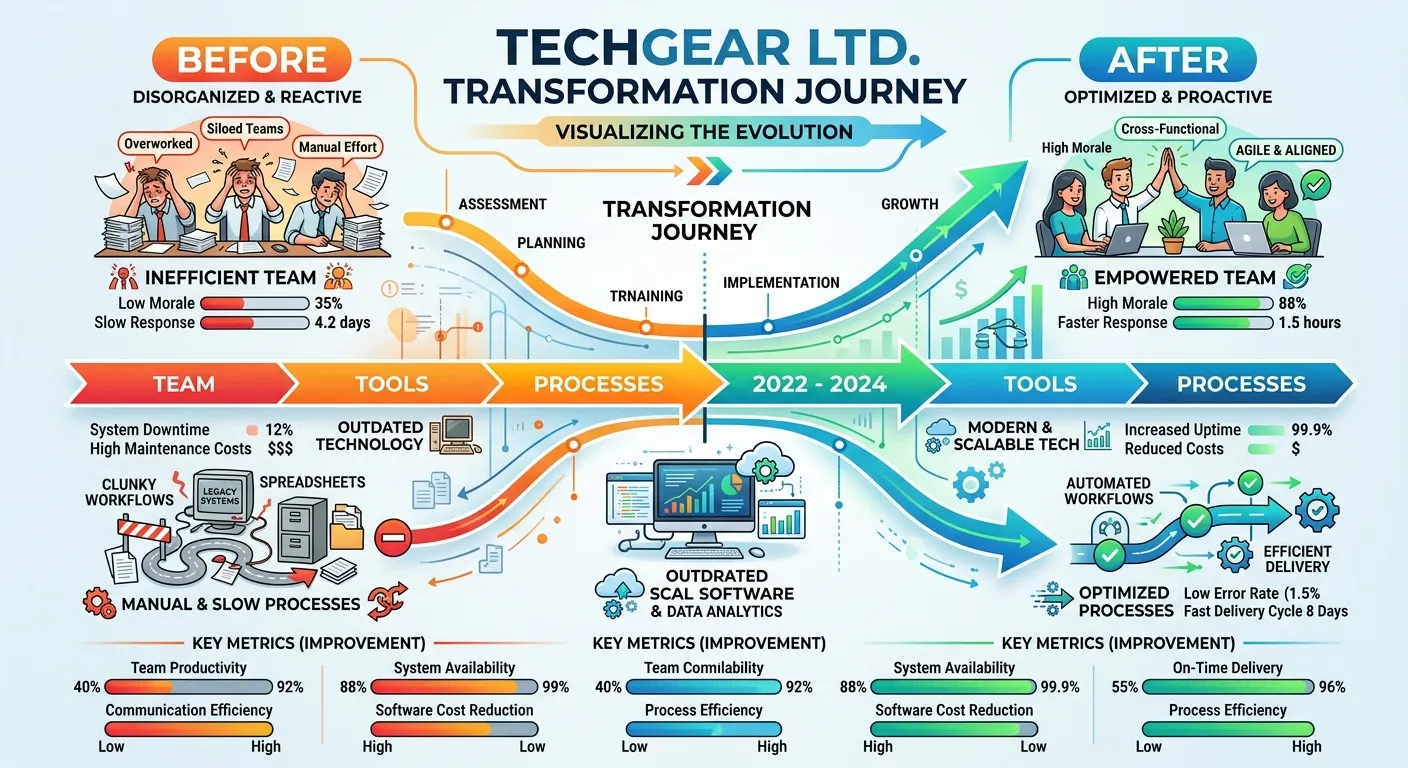
Case Study: How a Unified Service Strategy Drove 40% Revenue Growth
A real-world example of investing in people, process, and technology to turn customer service into a primary growth driver.
The Challenge: Scaling Without Losing the Personal Touch
"TechGear Ltd.", a mid-sized e-commerce retailer specializing in outdoor equipment, faced a classic growth paradox. As sales increased by 60% year-over-year, their five-person, ad-hoc customer service team was overwhelmed. First Response Time ballooned to 48 hours, Customer Satisfaction (CSAT) scores plummeted to 68%, and negative social media mentions spiked. Advisors lacked unified tools, working between a basic helpdesk, personal email, and a shared spreadsheet for tracking issues—leading to duplicated efforts and lost tickets.
The leadership initially viewed customer service as a necessary cost. However, analysis showed a direct correlation between service delays and cart abandonment on subsequent visits. They risked eroding the loyal community they had built. The goal was clear: transform the support function from a reactive cost center into a proactive brand asset without stifling the authentic, expert advice that was their market differentiator.
The Transformation Blueprint
- Phase 1 - Foundation: Hired a dedicated Customer Experience Lead and implemented an omnichannel platform (Zendesk) to unify all communications.
- Phase 2 - Team Building: Expanded the team to 12, hiring for empathy and product passion. Partnered with a virtual answering service to handle after-hours and basic inquiries, allowing the core team to focus on complex issues.
- Phase 3 - Empowerment: Created a rich internal knowledge base and gave advisors authority to issue refunds up to £100 and expedite shipping without managerial approval.
- Phase 4 - Proactive Engagement: Used service data to identify common product confusion, leading to redesigned product guides and tutorial videos.
The Results: Metrics That Matter
12h
First Response Time (Down from 48h)
94%
Customer Satisfaction (CSAT) Score
40%
Increase in Repeat Customer Revenue
1.2x
Average Order Value from Service-Initiated Contacts
The most significant outcome was cultural. Advisors, now called"Gear Guides," became proud product experts. Their direct feedback led to two best-selling product refinements. The outsourced partner handled routine logistics queries, creating a scalable model. This case proves that strategic investment in the service function delivers a direct, measurable return.
Beyond CSAT: Advanced KPIs for World-Class Service Management
While Customer Satisfaction (CSAT) and First Contact Resolution (FCR) are foundational, leading organizations track deeper metrics that predict long-term health and uncover hidden opportunities.
1. Customer Effort Score (CES)
This measures how easy it is for a customer to get their issue resolved. A simple post-interaction survey asks:"How easy was it to get the help you needed?" on a scale from"Very Difficult" to"Very Easy."
Why it matters: Low effort is a stronger predictor of loyalty than high satisfaction alone. A complex resolution, even if successful, can drive customers to competitors next time. Tracking CES helps you streamline processes and empower advisors to reduce friction.
2. Sentiment Trend Analysis
Using AI tools to analyze the tone and emotion across all customer interactions (calls, emails, chats) over time, not just survey responses.
Why it matters: This provides a proactive, real-time pulse on customer mood. A sudden dip in sentiment around a specific product update or shipping delay can alert you to a brewing crisis before it hits social media or review sites. It also helps identify advisor burnout by detecting changes in their communication tone.
3. Internal Quality Score (IQS) & Advisor Growth
A composite score from call monitoring, knowledge base contributions, peer feedback, and process adherence. Track this score's trajectory for each advisor.
Why it matters: It moves beyond output to measure quality and professional development. A rising IQS indicates effective coaching and career progression. Linking this data to recruitment profiles can refine your hiring to target candidates with the traits of your top performers.
Data Integration Insight
The true power of these metrics is unlocked when they are cross-referenced. For example, correlate an advisor's IQS with the CES of their customers. Do your"high-quality" advisors actually create low-effort experiences? Also, integrate service data (like complaint themes) with sales data. You may discover that customers who contact service about"Assembly Difficulties" have a 70% lower lifetime value, justifying a redesign of instructions or packaging.
This level of analysis requires breaking down data silos. Whether you use an in-house BI tool or the analytics suite of a premium virtual answering service, the goal is a single source of truth that connects customer service impact to overall business health.
Building Career Ladders: Retain Talent by Growing Advisors into Leaders
High turnover in customer service is often a function of perceived dead-end roles. Combat this by designing clear, multi-track career progression paths that recognize and reward expertise, leadership, and specialization.
| Career Level | Typical Role & Responsibilities | Development Focus & Skills |
|---|---|---|
| Tier 1: Foundation | Customer Service Advisor Handles standard inquiries via multiple channels, follows scripts and processes. |
Product mastery, core tool proficiency, active listening, de-escalation. Success measured by core KPIs (FCR, CSAT). |
| Tier 2: Specialist | Senior Advisor / Subject Matter Expert Tackles complex, escalated cases. Trains new hires. Contributes to knowledge base. |
Advanced problem-solving, mentoring, technical writing. May specialize in a product line or channel (e.g., social media support). |
| Tier 3: Leadership | Team Lead / Quality Assurance Analyst Manages a small team, monitors interactions, provides coaching, analyzes performance data. |
People management, data analysis, constructive feedback, process improvement. A hybrid people/operations role. |
| Tier 4: Strategic | Customer Experience Manager / Ops Manager Owns the service strategy, budget, technology stack, and interfaces with other departments (Product, Marketing). |
Strategic planning, budgeting, project management, cross-functional leadership. Translates service data into business recommendations. |
Parallel Tracks: The Individual Contributor Path
Not every star advisor wants to manage people. Create a parallel"Expert" track that offers comparable prestige and compensation for those who wish to deepen their technical or customer-facing expertise. Titles like"Principal Customer Advocate" or"Lead Resolution Specialist" recognize this value. These individuals can handle ultra-complex cases, lead beta testing for new support tools, or act as liaisons to the product development team.
This model is particularly effective in specialized fields. For instance, an advisor in a medical receptionist role could progress to become a"Patient Experience Coordinator," handling complex scheduling systems, compliance training for new staff, and interfacing with clinical teams to improve the patient journey.
Investment in Continuous Learning
Career paths must be supported by tangible learning opportunities. This includes:
- Annual budgets for external courses (e.g., on communication, data analysis, specific software).
- Internal"lunch and learn" sessions led by senior staff or other departments.
- Cross-training in related departments (e.g., a week in sales or logistics) to build business acumen.
- Clear, transparent promotion criteria tied to the mastery of skills at each level.
By showcasing this commitment to growth, you not only retain your best people but also attract ambitious candidates who see customer service as a launchpad for a meaningful career, not just a job.