The Essential Guide to Hiring and Becoming a Veterinary Receptionist
Discover the pivotal role, key skills, and expert hiring strategies for the front desk of any successful veterinary practice.
Hire a Veterinary Receptionist Today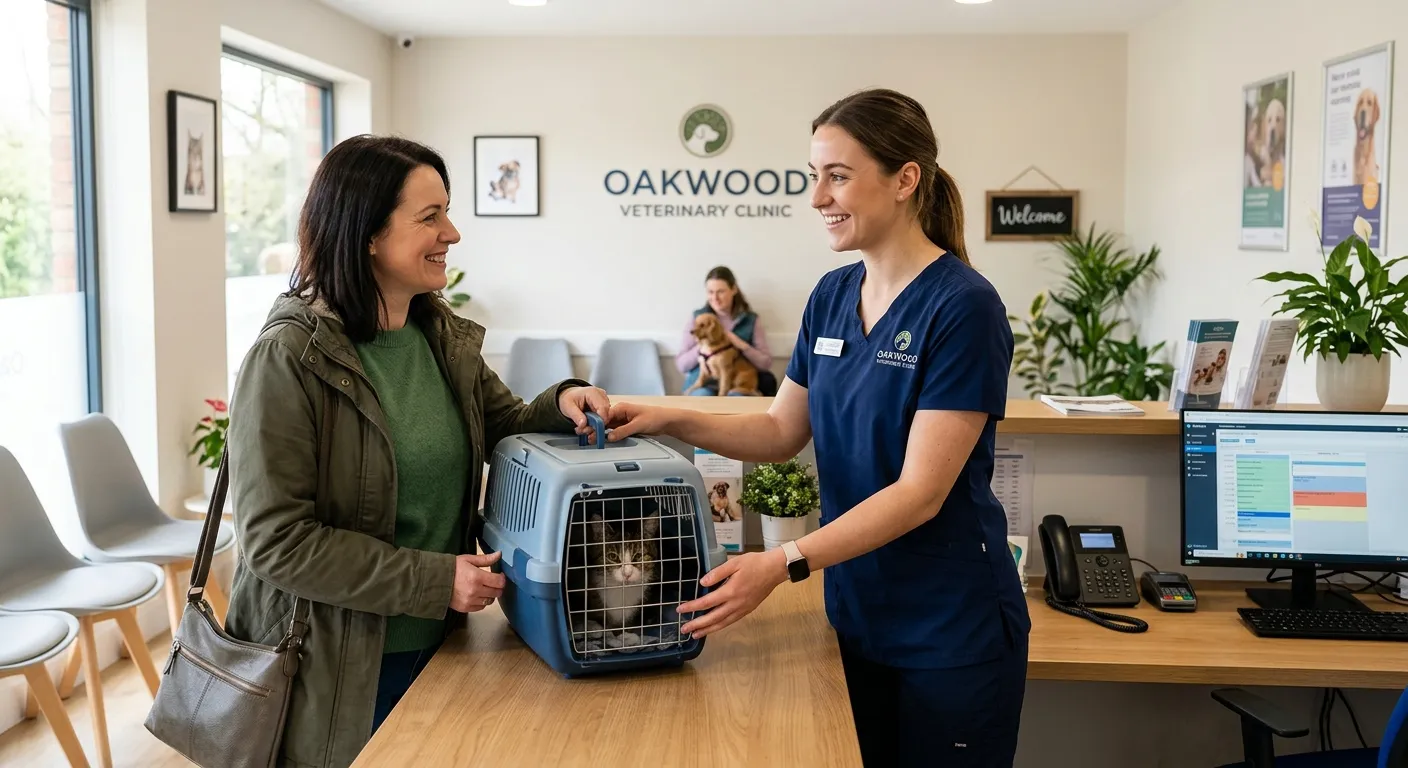
Your Complete Veterinary Receptionist Overview
More Than Just an Answering Service
A Veterinary Receptionist is the first point of contact and the beating heart of any animal clinic. Far more than a simple call handler, they are a multi-skilled professional who manages client relations, coordinates patient care, and ensures the smooth administrative flow of the practice. They set the tone for the entire client experience, transforming a stressful visit into a positive one through empathy, organization, and clear communication. Their role directly impacts client retention, practice reputation, and overall operational efficiency.
While a professional phone answering service can manage basic call overflow, a dedicated veterinary receptionist provides the specialised medical knowledge, emotional intelligence, and practice-specific understanding that technology cannot replicate. They are the crucial link between worried pet owners, busy veterinarians, and the clinical team.
The Non-Negotiable Skill Set
The ideal candidate blends soft skills with technical aptitude. Exceptional communication is paramount, requiring the ability to explain complex medical instructions with clarity and calm distraught clients with compassion. They must possess outstanding organizational skills to juggle appointment scheduling, medical records, billing, and inventory management, often under pressure. A foundational understanding of veterinary terminology, common procedures, and animal behavior is essential to triage calls accurately and support the clinical team effectively. Furthermore, proficiency in practice management software (like VSOS, ImproMed, or Cornerstone) and standard office suites is a baseline requirement in the modern clinic.
Pro-Tip: Assessing Soft Skills
During interviews, use scenario-based questions. Present a situation like an angry client whose pet's surgery is delayed or a distressed caller with an emergency. Listen not just for the"right" answer, but for empathy, problem-solving structure, and calm professionalism. This reveals more than any CV can.
Streamlining Your Recruitment Process
Hiring the right veterinary receptionist is a critical investment. A rushed hire can lead to costly turnover, disrupted workflows, and damaged client relationships. To attract top talent, craft a compelling job description that goes beyond duties and highlights your practice's culture, values, and support for professional development. Utilise a multi-platform approach: advertise on specialised veterinary job boards, leverage local community networks, and consider partnering with a specialised receptionist recruitment agency. For clinics in the capital, working with a dedicated Veterinary Receptionist Recruitment Agency London can provide access to a pre-vetted, high-calibre talent pool familiar with the pace and demands of city practices.
For immediate cover or to assess fit before a permanent offer, exploring a remote receptionist or a hybrid model can be an effective stopgap, ensuring your phones and schedules are managed without interruption while you search for the perfect permanent fit.
A Launchpad for Growth
The reception desk is a fantastic launchpad for a long-term career in the veterinary industry. Ambitious receptionists can advance into Practice Manager roles, Office Administration leads, or specialise in areas like veterinary pharmacy or inventory management. Many use the role as a stepping stone while studying to become Veterinary Nurses or Technicians, as it provides unparalleled insight into clinic operations and client care. The skills gained—client service, multitasking, medical administration—are also highly transferable to other medical receptionist roles or broader customer service leadership positions.
Why a Specialist Veterinary Receptionist is Indispensable
Client Experience & Retention
They build trust and rapport, turning new clients into loyal advocates. Their empathetic handling of sensitive situations reduces stress and directly impacts your practice's online reviews and reputation.
Clinical Efficiency
By accurately triaging calls, managing schedules to optimize vet time, and preparing patient notes, they free up the clinical team to focus on medicine, increasing the practice's capacity and revenue.
Operational Guardian
They safeguard compliance by managing confidential records, ensure financial accuracy through precise billing, and maintain inventory for essential supplies, preventing costly operational disruptions.
The Day-to-Day: A Symphony of Tasks
A typical day is dynamic and requires constant prioritization. It begins with preparing the reception area and reviewing the day's schedule. The phone rings constantly—appointment bookings, medication inquiries, lab result calls, and potential emergencies must be handled with speed and accuracy. In-person, they greet clients, check patients in and out, process payments, and reconcile end-of-day reports. Behind the scenes, they manage prescription requests, coordinate with specialist referrals, update digital records, and order clinical supplies.
This role demands a unique balance of compassion and clerical precision. Unlike a general call answering service in London, they make clinical judgements on urgency, understand insurance claim processes, and provide after-care advice, all while maintaining a welcoming, calm front-of-house.
Critical Daily Responsibilities Checklist
- Answer, screen, and route all incoming calls with professional triage.
- Schedule, confirm, and reschedule appointments efficiently.
- Maintain accurate and confidential electronic medical records (EMR).
- Process payments, handle pet insurance claims, and manage billing inquiries.
Expert Insight: The Cost of a Bad Hire
A mismatched veterinary receptionist can cost a practice thousands in lost revenue, training time, and client attrition. The hidden costs include disrupted team morale, increased errors in scheduling or billing, and the management time required for repeated recruitment cycles. Partnering with a specialist agency, much like you would for finding healthcare assistants in Bolton or recruitment talent in Leeds, mitigates this risk. They provide access to candidates who are not only skilled but also culturally aligned and genuinely passionate about animal care, ensuring a longer-lasting, more productive placement.
Integrating Support Solutions: When to Augment Your Team
Even the best receptionist can be overwhelmed during peak hours, holidays, or unexpected absences. Savvy practice managers are now blending their core team with flexible support solutions. For after-hours calls, weekend coverage, or call overflow during lunch breaks, a virtual answering service for small businesses can be a lifesaver, ensuring no emergency call is missed.
For longer-term gaps, such as maternity cover or a search for a permanent hire, a temporary veterinary receptionist provides continuity. This is where a staffing partner with expertise in both permanent and temporary placements proves invaluable. They understand that the needs of a veterinary practice are distinct from other sectors, requiring a blend of customer service tenacity and clinical environment savvy.
Exploring remote customer support roles can also reveal transferable talent that, with the right veterinary-specific training, could become an asset, especially for handling non-clinical scheduling and administrative tasks from a remote hub.
Frequently Asked Questions
A veterinary receptionist requires specialised knowledge. They must understand basic animal anatomy, common medical terminology, and triage protocols to assess the urgency of a situation (e.g., distinguishing between a routine vaccination query and a potential poisoning). They handle emotionally charged interactions with distressed pet owners daily and manage sensitive medical records and controlled drug logs, which adds layers of responsibility and compliance not typically found in a standard office reception role.
A specialist agency saves you significant time and resources. They have an existing network of pre-screened candidates who have chosen to work in veterinary care. They understand the specific challenges of London practices—high client volume, fast pace, diverse community—and can match you with individuals who thrive in that environment. They handle the initial advertising, CV sifting, and first-round interviews, presenting you only with the most qualified and suitable candidates, dramatically reducing your time-to-hire and improving the quality of your hire.
Prioritise evidence of stability in customer-facing roles, especially in medical, care, or high-pressure environments. Look for specific mention of veterinary or medical practice management software. Any qualifications in animal care, customer service, or business administration are a strong plus. Gaps in employment are less critical than a demonstrated pattern of empathy, responsibility, and organisational skill. References that highlight calmness under pressure and initiative are gold dust.
Technology is a powerful tool for augmentation, not replacement. AI call-answering can efficiently handle after-hours inquiries, basic appointment requests, and call overflow, as seen in advanced business call answering services. However, the nuanced judgement, deep empathy, and complex problem-solving required in a veterinary setting—especially during emergencies or when dealing with grieving clients—are uniquely human skills. The future lies in a hybrid model where technology handles routine tasks, freeing the human receptionist to focus on high-value, compassionate client care and complex administrative coordination.
For more general inquiries, visit our comprehensive FAQ page.
Ready to Find Your Practice's Frontline Hero?
Stop missing calls and start building exceptional client relationships. Whether you need a permanent specialist, temporary cover, or strategic advice on structuring your front desk team, we connect you with the talent that makes a difference.
For specialised support in the capital, inquire about our Veterinary Receptionist Recruitment Agency London solutions.
Salary Benchmarks & Compensation Strategy
Competitive compensation is crucial for attracting and retaining top-tier veterinary reception talent. Salaries vary significantly based on location, practice type (corporate vs. independent), and the complexity of the role. In major metropolitan areas like London, salaries can range from £24,000 to £30,000+ for experienced candidates, reflecting the higher cost of living and client volume. In other regions, the range typically falls between £20,000 and £26,000.
However, savvy practices look beyond base salary. A compelling benefits package can be a decisive factor. Consider including private healthcare, generous holiday allowance, paid continuing education allowances for courses in veterinary administration or customer service, and discounted pet care. For many candidates, a supportive culture and clear paths for advancement are as valuable as monetary compensation.
Case Study: Reducing Turnover in a Bristol Practice
A 3-vet practice in Bristol was experiencing 18-month turnover cycles for reception staff. By partnering with a specialist recruiter, they benchmarked their package against the market. They increased the base salary by 8% and introduced a structured quarterly bonus tied to client satisfaction scores and team goals. Within a year, turnover dropped to zero, and patient satisfaction scores increased by 22%. The investment in retention far outweighed the constant cost of recruitment and training.
Key Compensation Components
- Base Salary: The foundational pay, commensurate with experience and local market rates.
- Performance Bonuses: Tied to measurable KPIs like client retention, up-selling of preventative care plans, or administrative accuracy.
- Professional Development: Budget for certifications (e.g., from the Veterinary Receptionist Association) or software training.
- Wellbeing & Perks: Mental health support, team social budgets, and, critically, generous pet bereavement leave.
Mastering the Interview & Onboarding Process
Finding the right candidate is only half the battle. A structured interview and a comprehensive onboarding plan are essential to secure their commitment and ensure long-term success.
The Practical Assessment
Move beyond theoretical questions. Provide a simulated phone call with a"client" (a staff member) describing vague symptoms. Observe how the candidate gathers information, shows empathy, and decides on urgency. A simple data-entry test using dummy software can reveal their comfort with technology and attention to detail.
The Team Fit Interview
Have the candidate meet with 2-3 key team members, including a vet nurse and a senior vet. This provides multiple perspectives and allows the candidate to ask informal questions. Pay attention to how they interact with the clinical team—mutual respect is critical for smooth practice operation.
The Structured Onboarding Plan
A"sink-or-swim" approach leads to early turnover. Create a 30-60-90 day plan. The first 30 days should focus on shadowing, learning software, and understanding protocols. Days 30-60 introduce independent task handling with support. By day 90, they should be confidently managing their full remit with periodic reviews.
Onboarding Checklist: First Two Weeks
- Introduction to all team members and their roles.
- In-depth training on the Practice Management Software.
- Review of emergency protocols and triage guidelines.
- Shadowing checkout and payment processing.
- Access to and review of key practice policies (data protection, etc.).
- Assignment of a"buddy" (an experienced receptionist or nurse) for ongoing questions.
The Future of the Veterinary Front Desk: Trends & Adaptations
The role of the veterinary receptionist is evolving rapidly, driven by technology and changing client expectations. The rise of tele-triage and virtual consultations means receptionists are now often the first to assess whether a pet needs an in-person visit or can be helped remotely. They must be adept at guiding clients through setting up video calls and submitting digital photos.
Client communication is also shifting. While the phone remains vital, many clients now prefer to book appointments, request prescriptions, and ask non-urgent questions via practice apps, websites, or even SMS. The modern receptionist must manage these digital channels seamlessly alongside traditional ones, ensuring a consistent and prompt response. This multi-channel management is a skill set where a virtual answering service can provide complementary support during peak digital traffic.
Furthermore, with the growth of pet insurance, receptionists are increasingly becoming insurance specialists—helping clients understand their coverage, pre-authorising claims, and navigating complex paperwork. This financial advisory element adds another layer of expertise to the role.
Essential Tech Tools for the Modern Practice
-
Integrated Client Portals: Allow clients to book, pay, and access records online, reducing phone volume for routine tasks.
-
Automated SMS Reminders & Confirmations: Drastically reduce missed appointments and free up reception time for more complex interactions.
-
Cloud-Based Practice Management Software: Enables secure access to records from anywhere, facilitating remote work or hybrid models for certain administrative tasks.