Secure Your Operations: The Ultimate Guide to Professional Key Holding Services
Discover how outsourced key holding protects your assets, ensures compliance, and provides 24/7 peace of mind for businesses of all sizes.
Secure Your Key Holding Staff TodayIn today’s complex business environment, security and accessibility are non-negotiable. Key holding services represent a critical, yet often overlooked, component of professional facility management and security protocols. Far more than just a spare key under a mat, professional key holding is a systematic, secure, and responsive service designed to safeguard your most valuable physical assets—your premises. This comprehensive guide will delve into everything you need to know about key holding services, from core functions and benefits to implementation strategies and how they integrate with modern business solutions like virtual answering services for small businesses.
Pro-Tip:
When evaluating key holding providers, ensure their response protocols are integrated with your other operational systems. For instance, a call from an alarm monitoring center should be seamlessly handled, whether by your key holder or a dedicated live phone answering service, to ensure no emergency signal is ever missed.
What Are Key Holding Services? A Deep Dive
At its essence, a key holding service is a formal arrangement where a trusted, third-party professional or company retains custody of your business property keys. This entity is then responsible for providing authorized access to your premises under predefined circumstances. This moves the risk and responsibility away from individual employees or directors, centralizing it with a vetted, insured, and trained specialist. The scope of these services has evolved significantly, now often encompassing lock-up/unlock services, emergency response coordination, contractor access supervision, and full alarm response in partnership with security firms. For businesses that also rely on remote teams, integrating key holding with remote answering services creates a unified operational front.
Who Needs Key Holding Services? An Interactive Overview
Office Blocks, Warehouses & Manufacturing Sites
These facilities often have complex access schedules for cleaning staff, maintenance contractors, and shift workers. A key holder manages this seamlessly, ensuring only authorized personnel gain entry at the correct times. This is particularly vital for sites that may need out-of-hours access, similar to how a 24/7 phone calling service manages constant communication flow.
- Secure opening/closing for non-standard hours.
- Supervised access for deliveries, audits, or emergency repairs.
- Primary contact for alarm response, minimizing police false alarm fines.
Shops, Restaurants, Pubs & Hotels
With high staff turnover and late-night operations, these businesses benefit from removing key responsibility from managers. It also provides a secure audit trail for who accessed the property and when, crucial for cash handling and stock security.
Landlords, Letting Agents & Estate Managers
Managing multiple properties means managing multiple sets of keys. Professional key holding streamlines access for viewings, inspections, and emergency tenant lockouts, while maintaining strict chain of custody. This operational efficiency mirrors the benefits found in specialized staffing, such as when you hire top freelance chefs in Dartford for precise culinary needs.
Medical Practices, Clinics & Care Homes
These sensitive environments require immediate, authorized access for on-call staff and emergency services. A key holding service ensures compliance with health and safety regulations regarding access control. The need for reliable, immediate response is as critical here as it is for patient communication, which is why many practices also employ a dedicated medical receptionist service.
Core Benefits & Features: Why Your Business Can't Afford to Go Without
Investing in a professional key holding service delivers a multifaceted return on investment that extends far beyond simple convenience. It is a strategic decision that enhances security, reduces liability, and improves operational resilience.
Enhanced Security & Reduced Risk
Eliminates the risk of lost, stolen, or copied keys from staff. Provides a single, auditable point of access control. Vetted and insured personnel handle all entries, significantly reducing your exposure to internal and external security threats.
24/7 Emergency Response
Be it a burglar alarm activation, a fire alarm, or a burst pipe, a dedicated key holder can attend the premises at any hour. This swift response can minimize damage, satisfy insurance requirements, and prevent costly false alarm charges from authorities.
Operational Efficiency & Convenience
Frees up management time from opening/closing duties. Simplifies access for contractors, cleaners, and visitors without compromising security. Creates a reliable system that works regardless of staff sickness or holiday, much like a dependable best virtual receptionist UK service ensures calls are always answered.
Insurance & Compliance Advantages
Many insurers look favorably upon professional key holding, potentially lowering premiums. It demonstrates due diligence in risk management and can be essential for meeting health & safety, fire safety, and data protection (GDPR) regulations regarding physical site security.
Staff Safety & Peace of Mind
Employees are not put at risk by carrying keys or attending premises alone at unsociable hours. Directors and managers gain peace of mind knowing their property is professionally monitored and accessible in a crisis, allowing them to focus on core business activities.
Rapid, Scalable Solutions
Professional services can be scaled up or down based on your needs, perfect for seasonal businesses or those undergoing expansion. This flexibility is a hallmark of modern staffing solutions, much like the agility offered by all temporary agencies when addressing fluctuating workforce demands.
Implementing Key Holding Services: A Step-by-Step Strategy
Transitioning to a professional key holding service requires careful planning. Follow this actionable roadmap to ensure a smooth and secure implementation.
- Conduct a Comprehensive Risk Assessment: Audit all access points, identify key holders, and document all current key copies. Understand your peak access times and emergency response needs.
- Select a Reputable Provider: Look for companies with SIA (Security Industry Authority) licensing, full public liability insurance, and proven track records. Check references and ask about their response time guarantees and audit procedures.
- Define Clear Protocols & Escalation Paths: Create a detailed Service Level Agreement (SLA). Specify authorized personnel, access scenarios (routine, contractor, emergency), and communication chains. Ensure these protocols integrate with your other services, such as your phone answering services, so call-outs are handled efficiently.
- Secure Key Handover & Audit Trail: Use a dual-control process for transferring keys. Ensure the provider uses high-security key cabinets, logs every key movement digitally, and provides you with real-time access reports.
- Communicate & Train Your Team: Inform all staff about the new procedures. Clearly explain who to contact for access and how emergency situations will be handled. This internal communication is as vital as the external coordination handled by a customer support service in London.
- Review & Optimize Regularly: Conduct quarterly reviews of access logs and incident reports. Adjust protocols as your business evolves, ensuring your key holding service remains perfectly aligned with your operational needs.
The Future of Key Holding: Integration with Smart Technology
The future of key holding is digital and integrated. While physical key custody remains, it is increasingly supported by smart access systems. Temporary digital codes, biometric scans, and mobile-app-based access can be issued by the key holding service for specific contractors or one-time visits, creating an even more secure and traceable system. This technological evolution parallels advancements in communication, where AI phone answering is enhancing traditional call handling. The key holding service of tomorrow will act as the central administrator for a hybrid physical-digital access ecosystem, providing unparalleled security and flexibility.
Key Holding & The Hybrid Workforce
As hybrid and remote work models solidify, the need for flexible, secure office access grows. Key holding services enable businesses to maintain a physical hub that staff can use on-demand, without requiring full-time onsite management. This complements the rise in remote support roles, such as the remote customer support jobs in Doncaster we help fill, creating a business model that is both secure and agile.
Frequently Asked Questions (FAQ)
Get immediate answers to the most common questions about professional key holding services.
Costs vary based on location, number of premises, required response times, and service level. Most providers offer a monthly retainer plus per-callout fees. It's often more cost-effective than employing a dedicated staff member for the duty, especially when considering insurance, training, and liability. For a complete picture of operational costs, it's useful to compare with other outsourced functions, like reviewing the pricing for communication services.
Absolutely. Reputable providers carry substantial public liability insurance (often £5-£10 million) and professional indemnity insurance. Always request proof of insurance and ensure it is current. This insurance protects your business in the unlikely event of negligence, providing a critical safety net that you don't get with an informal key arrangement.
A true 24/7 key holding service is always on call. You or your alarm receiving centre would contact the provider's dedicated emergency line, and a vetted key holder will be dispatched immediately. Response times are typically stipulated in your SLA (e.g., within 45 minutes). This reliability is akin to a top-tier business calls answering service that ensures no urgent call is ever missed.
Yes, this is a common and effective hybrid model. Your in-house or contracted security guards handle on-site presence and patrols, while the key holding service manages the secure custody of keys and provides guaranteed emergency response. This separates duties and enhances overall security resilience. Finding the right balance of internal and external resources is a key principle in modern operations, whether for security or for staffing needs through a top temp agency.
Start with a search for SIA-licensed security companies in your area. Ask for case studies or references from clients in similar industries. Crucially, interview them on their procedures: How are keys stored? What is the audit process? What is their average emergency response time? For more general questions on service providers, you can also check our comprehensive FAQ section for guidance on evaluating business partners.
Ready to Secure Your Business with Professional Key Holding?
Don't leave the security of your premises to chance. Implementing a robust key holding service is a definitive step towards operational excellence, risk mitigation, and lasting peace of mind. Whether you run a small clinic, a bustling restaurant, or a multi-site enterprise, the right key holding strategy is within reach.
If your key holding solution requires dedicated personnel, we can connect you with the right talent. Hire vetted, reliable staff today to manage this critical function.
Post Your Key Holding Job NowOr explore our other services to build a fully integrated and secure business operation.
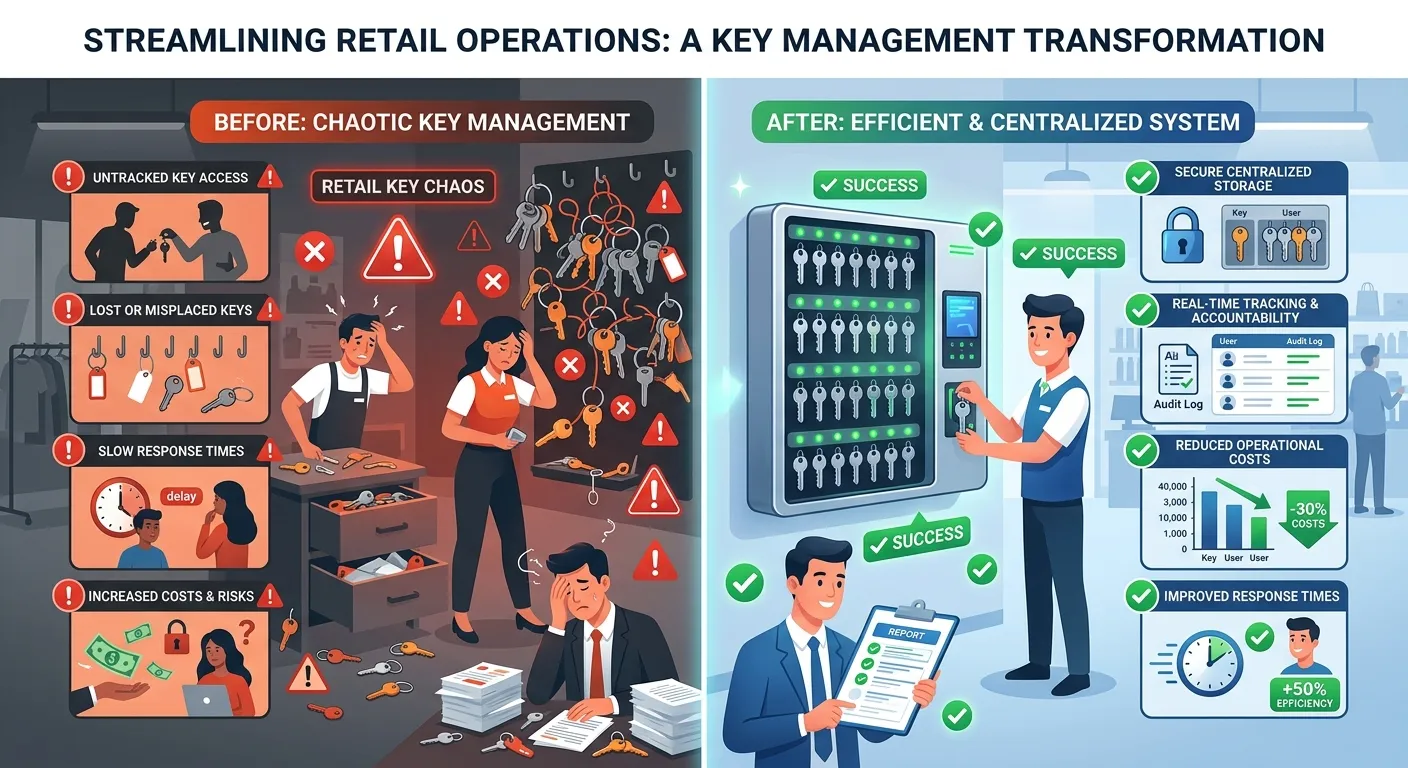
Case Study: A Retail Chain's Transformation
Consider a national retailer with 12 high-street locations. Each store manager held keys, leading to inconsistent opening times, security vulnerabilities when managers left, and a nightmare during alarm activations at 3 AM. After a spate of false alarm fines and a near-miss security breach, they partnered with a professional key holding service.
The Solution & Results:
- Centralized Control: All master keys were secured in the provider’s high-security facility. Digital key tags tracked every movement.
- Standardized Operations: The service handled all daily opening and closing according to a digital schedule, eliminating reliance on individual managers.
- Integrated Alarm Response: The alarm monitoring company was instructed to call the key holder first. The provider guaranteed a 30-minute response to any site, 24/7.
- Financial Impact: Within one year, false alarm charges dropped by 92%. The operational consistency also reduced overtime costs for managers.
This case underscores how key holding is not just a security measure, but a core operational efficiency tool, much like integrating a virtual receptionist service streamlines customer interactions.
Beyond the Key: Additional Services in a Modern Package
Today's leading key holding providers often bundle complementary services, creating a holistic site management solution. Understanding these can help you maximize value from your partnership.
Alarm Response & Incident Management
This is the most critical add-on. The key holder doesn't just attend; they act as your on-site representative. They liaise with emergency services, secure the premises post-incident, and provide a detailed forensic report. This turns a panic-inducing event into a managed process.
Contractor & Visitor Escort Services
For high-security sites or sensitive areas, key holders can provide a"lock and unlock" escort. The contractor is granted access only for the duration of the work, and the key holder secures the area afterwards. This maintains the chain of custody and prevents unauthorized roaming.
Property Inspection Visits
Scheduled or random inspections can be conducted by the key holder, especially for vacant properties or during holiday closures. They check for signs of trespass, water leaks, or damage, providing a written report with photos. This proactive monitoring can prevent minor issues from becoming major losses.
Secure Key Duplication & Lock Cycling
When you need to add or change locks, the provider can manage the entire process—from secure duplication at certified facilities to the physical replacement of locks and the retirement of old keys. This ensures no unauthorized copies remain in circulation.
The Hidden Liability of Informal Key Arrangements
Many businesses underestimate the legal and financial exposure of informal key management. Consider these scenarios:
- Employee Departure: A disgruntled former employee with a copied key represents a direct threat. Changing all locks is costly and disruptive.
- Loss of Keys: If a manager loses a set of keys, the business faces the dilemma of whether to incur the significant expense of a full lock replacement. Insurance may not cover subsequent theft if negligence is proven.
- Lack of Audit Trail: In the event of a burglary or internal theft, without a definitive log of who had access and when, police investigations hit a dead end, and insurance claims can be disputed.
Professional key holding converts this variable risk into a fixed, manageable cost with defined liability. It's a strategic financial decision as much as an operational one. For other areas of hidden operational risk, such as unprofessional call handling, businesses often turn to specialized support like a legal answering service to mitigate liability.
Choosing the Right Provider: A Checklist for Due Diligence
Beyond checking for SIA licenses and insurance, use this detailed checklist during your provider selection process to ensure a perfect fit.
| Criteria | What to Ask/Look For | Why It Matters |
|---|---|---|
| Technology & Reporting | Do they use a digital key cabinet with biometric access? Can you receive real-time access logs and incident reports via a portal or email? | Ensures transparency and provides you with auditable data for compliance and internal reviews. |
| Response Geography & Scale | What is their guaranteed geographic coverage? Can they scale if you open new premises in another city? | Guarantees service consistency for multi-site operations and supports your business growth. |
| Staff Vetting & Training | What specific vetting (e.g., BS7858) do their key holders undergo? How often is training refreshed? | Directly impacts the trustworthiness and competence of the personnel accessing your property. |
| Disaster Recovery Plan | What happens if their primary key holding depot is compromised? Do they have a backup facility? | Tests the resilience of the service itself. Your security shouldn't depend on a single point of failure. |
| Contract Flexibility | Are contracts rigid or can they be tailored? Is there a clear exit process for key return and lock changes? | Protects you from being locked into an unsuitable service and ensures a secure termination. |
Final Thoughts: Key Holding as a Strategic Investment
Viewing key holding as a mere cost is a mistake. It is an investment in business continuity, risk management, and operational calm. The return manifests not only in potential insurance savings but in the invaluable currency of management time and mental bandwidth. Leaders are freed from the low-level worry of physical access, able to focus on growth and strategy. In an era where businesses leverage remote talent—from freelance graphic designers in London to international support teams—the ability to maintain a secure, accessible, and professionally managed physical presence becomes a unique competitive advantage. Your premises are the foundation of your operation; professional key holding ensures that foundation is solid, responsive, and always under control.